

Dreading Orange Skies

This edition is available to all (except the paid exclusives). Support my work and upgrade to paid here for as little as $5 a month. All summer long, new subscribers can sign up for only $35 a year.
LISTENING: to my microwave crackling and cooking meatballs
FEELING: disturbed
SEEING: rains pour outside my window
I've spent the afternoon walking to my balcony, checking to see if the sky has turned orange. The orange skies never arrived in Queens this hazy, smoky Wednesday. Thunderous rains crashed overhead instead.
The last time Canadian wildfire smoke reached the Northeast, where I reside, the skies turned orange. Remember? I do. The air was heavy. Just like it was today when I stepped out for a doctor's appointment and lunch with an old friend. My friend Alanis described the lingering air perfectly: "lifeless."
 Yessenia Funes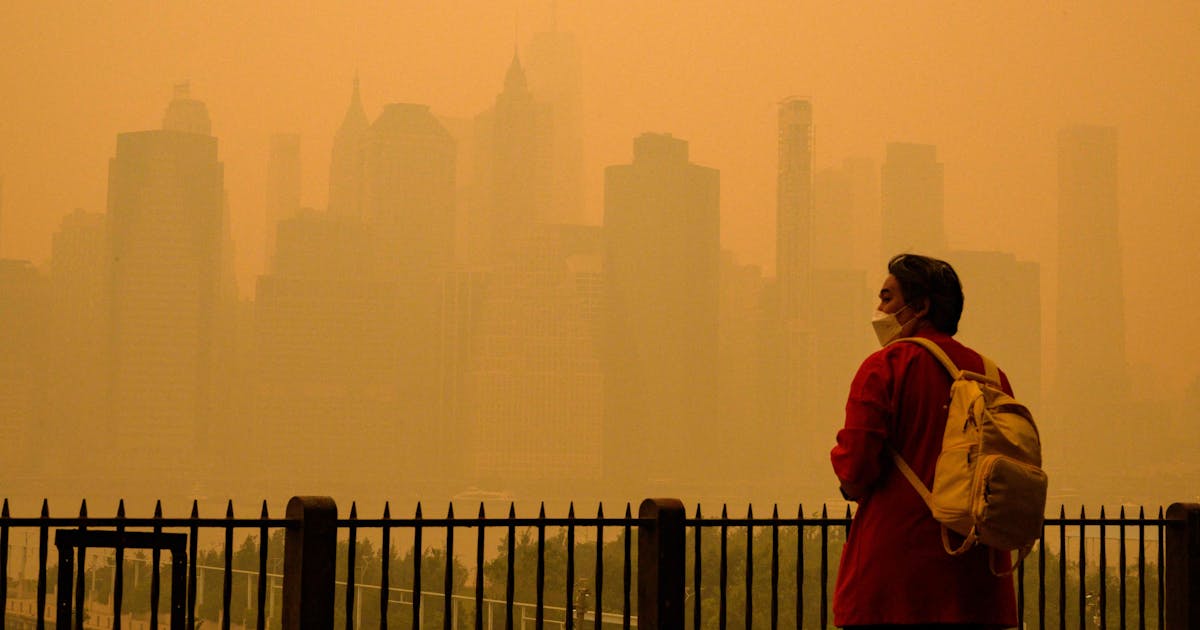
This is the kind of air that kills, reminds us Jeva Lange in her latest piece for Heatmap:
Before wildfire smoke turns the skies to a jaundiced yellow-gray, it might look almost pretty. Midday light grows diffuse, taking on a crepuscular golden hue. Shadows soften and stretch long. The sunsets are particularly incredible: radiant, neon red.
But as with oleander and poison dart frogs, beautiful things are often the most dangerous. The same wildfire particulates that scatter the light will, once dense enough, turn the air around you orange, then black. They will get into your lungs — slipping past your nose hairs and mucus, the body’s defenses that stop larger particulates — and provoke your immune system into an attack. The tiny air sacs at the ends of the bronchioles in your lungs, where the gas exchange of “breathing” actually happens, will become inflamed. You will become short of breath. You will cough. The smallest smoke particulates may even enter your bloodstream.
And if you are like 24,000 other Americans every year, this will kill you.
As I look on my phone, the air quality reads 169. That's the red zone, which means the air is unhealthy for all people but especially for those who already have health issues or are at sensitive stages of life. Like my little nephew who will be turning four months soon. His tiny lungs can't handle air this saturated in pollutants. I think of my mom who is pre-diabetic. She tries to go on walks outside to improve her health, but this air isn't safe for her. It's unsafe for us all. You don't need a number to tell this. You only have to breathe — to smell.
What we're experiencing in the Northeast, however, is a blip compared to the terrifying realities of the wildfires raging in Ontario. One train crew was surrounded by flames and managed to escape to safety, but the scene reminded me of that Apple TV movie with Matthew McConaughey, "The Lost Bus." (Seriously, you gotta' see this if you haven't. It's so good and sad and inspiring and cinematic.)
In Canada, over 100 wildfires are burning, reports NBC. Many were caused by lightning strikes, which climate change is projected to increase in frequency. But it's not just Canada — Minnesota is burning too, contributing to the smoke in the region. There, officials are warning that the wildfires could burn for months as summer temperatures reach painful highs.
This is what our summers have become. Forget your bathing suits or beach towels. Do you have your N-95 masks ready? 🌀
The newsletter ends here for free subscribers. Why not upgrade?
Rest in Power
While we can't say for certain that climate change led to these specific weather events (we need attribution studies for that), we do know that the Earth's rising temperatures are already creating more frequent and/or stronger disasters like these.
In China, where Typhoon Maysak brought deadly rains and floods, the death toll is up to 39. In Bangladesh, the lives lost is up to 51.
Spain has also been burning due to wildfires, which have killed at least 12 people. Another 23 people are still missing.
Currently Reading
While my home state of New York has placed a moratorium on data centers, Texas is going all in. Evan Simon reports for Floodlight on the loophole allowing companies to build quickly in the state.
I'm a sucker for cool interactive features, and this New Yorker story on a daughter who is immortalizing her father via AI doesn't disappoint. Check it out, from Sam Wolson.
Artwork

- Yessenia x

Comments ()