

Typhoon Worries in Chicago
This edition is available to all (except the paid exclusives). Support my work and upgrade to paid here for as little as $5 a month.
LISTENING: to this loud ass AC
FEELING: a little drunk
SEEING: my cute Airbnb living room
Y'all, I've got to admit that it is way too late — and I am a little too many cups into wine — to be writing this newsletter. So let me welcome Rachel Ramirez to do the talking. She's a talented climate journalist who has been tracking Super Typhoon Sinlaku. She's the only one I've seen covering it.
We're together at the Society of Environmental Journalists conference in Chicago. I'm here to talk about mental health, but I wanted to share some insight into this typhoon, whose April arrival is unsettling to say the least. Typhoons like these don't typically come until later in the year. Think of the Atlantic's August and September hurricane extremes.
Well, climate change is ruining all of our previous norms. It's unseasonably warm in this part of the globe. And I guess we've all got to grow used to this. Unfortunately, the communities suffering the most are also the ones that contributed the least to this mess.
That is a constant theme in this newsletter. It's a truth that never ceases to enrage me. Time to let Rachel break down the situation in her homeland of Saipan. If you haven't, be sure to subscribe to her newsletter, The Confluence, here.
This interview has been lightly edited and condensed for clarity.
YESSENIA FUNES
Break down what's going on with this super typhoon.
RACHEL RAMIREZ
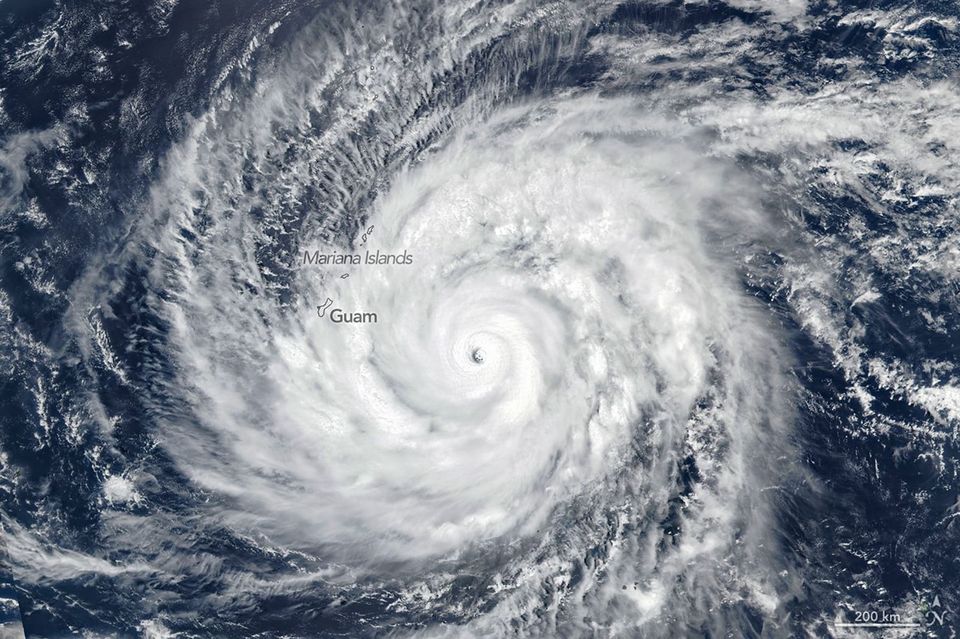
Super Typhoon Sinlaku is traveling toward the Northern Mariana Islands, specifically the islands of Saipan and Tinian. These are U.S. Territories in the Pacific. This is an unusual and rare phenomenon because it's coming in April, toward the end of the dry season. Peak typhoon season usually runs from August to November. The last super typhoon we had, Super Typhoon Yutu, was in October 2018. Before that was Super Typhoon Soudelor in August 2015, and those were very destructive. So this one caught us by surprise. And this typhoon was super significant not just because it's early in the season, but also because it was supposed to head toward Guam but shifted toward the Northern Mariana Islands. It rapidly intensified by 75 miles per hour under 24 hours.
That's more than what the definition of rapid intensification is — 35 miles per hour — so this is considered an extreme rapid intensification, which scientists say is going to be more common under a warming climate.
YESSENIA
You grew up in Saipan. What is the culture like around preparedness for these types of events?
RACHEL
It was ingrained in us. It was a common practice that when we got tsunami alerts or warnings, we would immediately evacuate to higher ground. We would go to my cousin's place because I lived two blocks away from the beach in a village called Chalan Kanoa. We're in this very flood-prone, vulnerable area where storm surge could creep up and devastate our entire home. But there were times when we would ride out the typhoon in our own house in CK, as we call it for short. The power would go off for days or weeks.
When the power would run out, my dad would charge this battery using our car and then bring it back to our home and power the AC because it was super hot. That's a common practice for us. And boarding up the windows and putting towels in the doors because of flooding. People would line up for gas when a typhoon was coming. The line would go for miles and miles. Tap water wouldn't be drinkable, so we would rely on these blue, five-gallon jugs of water, and that would sell out too in stores.
YESSENIA
What are your fears moving forward for the ways that climate-powered storms like these will affect the future of your homelands?
RACHEL
One of the things that worries me the most is the back-to-back storms. Ever since Typhoon Soudelor in 2015 and Super Typhoon Yutu in 2018, our economy has been in a downward spiral. Super Typhoon Yutu hit our only theater. Now, it's shut down. Our only mall is shut down. Tourism is super down. I went back home in February, and there were little to no tourists in our downtown area. Our entire island is run by tourism. Our economy is run by tourism. Then, after Super Typhoon Yutu, COVID hit, right? So that was back to back. And now we're getting hit by soaring gas prices. It's $8 a gallon now in some places. These back-to-back economic hits are really the most worrying part of living there, which is why my parents moved out soon after COVID.
My dad got furloughed, and my mom wanted to get off the island because of how bad the economy was. Our largest middle school was completely battered. You can imagine this education system being absolutely pummeled and disrupted by this extreme weather event. And then the federal government would bring in these brown FEMA tents where the students would go to school, no windows. One of the tents I visited had a painting of the beach because that was the old view from their middle school.
And then there's also this nuance of government corruption. It's these cumulative events that I'm scared of. If this continues, what's left? People are already moving out in droves. Who would preserve our culture? Who would continue on for the next generation?
YESSENIA
Yeah, and it's important to name the fact that this is a territory. The U.S. government has a responsibility to Saipan. How would you describe what that responsibility is of both the US government, but also those of us who are here in the mainland who don't think enough about our territories or U.S. colonies, if you will.
RACHEL
In the Pacific, our main export is people. These are U.S. citizens who can serve in the military, but they cannot vote for the president, their commander-in-chief. It's completely unfair. It's systemically unjust. Just to give you a sense of how embedded the military is — which is the world's number one polluter — in high school, I had two options for one of my credentials: either PE2 or ROTC. And PE2 required us to run campus runs three times every day. Or you join ROTC, and you get to wear the full military uniforms. So I chose ROTC for a year. And a lot of us switched to ROTC because we didn't want to suffer through the campus runs under extreme heat all the time.
If you do well in ROTC, then you get recruited by every branch of the military. I would get recruited in high school by the Marines, the Navy, the Army, and the Air Force. And it's not like they would send you an email. They would call you at your house or knock on your door. I had the Navy knock on my door several times because they wanted to recruit me. That's how actively the military would recruit back home. A lot of Pacific Islanders serve in the military, yet they can't vote for president. And at the same time, when a disaster happens, emergency aid and disaster relief are stalled and slow to come. That's where you question what your place is in this country.
The rest of the country has not even heard about the Northern Mariana Islands. It's sad and unfair.
YESSENIA
Anything else that feels really important to name?
RACHEL
These islands contribute so little to global emissions, yet they are bearing the heaviest cost of a crisis they did not create. 🌀
The newsletter ends here for free subscribers. Why not upgrade?
Rest in Power
While we can't say for certain that climate change led to these specific weather events (we need attribution studies for that), we do know that the Earth's rising temperatures are already creating more frequent and/or stronger disasters like these.
Cyclone Maila has left at least 23 dead in Papua New Guinea, as of Wednesday.
Currently Reading
I love Benji Jones' biodiversity coverage at Vox. His latest is a nuanced take on logging. I! Love! Nuance!
OnlyFans meets climate action? The Guardian's Stuart Heritage dives into this new approach for climate communications.
In case you need a reminder of how war is a climate issue, Naveena Sadasivam and Ayurella Horn-Muller got the story for you in Grist.
Such good writing on the latest mission to the moon: "They don’t know the moon like a sixteen year old immigrant girl. They don’t know the moon like I do at every phase of my menstrual cycle. They don’t know the moon like me when I became a mother. They’ll never know the moon like us who pray to her. I do not need to touch her surface, to take from her, nor to see her up close to know the body of space I named my daughter after. There are no borders or barriers to knowing her this way, and that is enough for me."
Poetry
OH, HELLO, CHICAGO
oh, hello, chicago
what a sight to see
a lake as vast as an ocean
a sky that's so windy
I know this is all a little new
and I'm just a curious stranger
but how do you do?
how do you survive?
don't the chills freeze you?
oh, but of course they don't—
not when the planet sends fossil-fueled warmth your way
an unseasonable warmth,
almost tragic
there's lightning and floods and tornados
what's even normal anymore?
nothing–
just our endless curiosity
and search for thrills
oh, hello, chicago
I'm sorry for what we've done
I'm sorry for all your ills
-ylf-
I'm so sleepy!!! Next week, I'll be writing from Amsterdam. :')
- Yessenia

Comments ()