

No Justice, No Peace

LISTENING: to the birds chirp outside
FEELING: a bit lost today
SEEING: annoying ants infest my office
Who won't remember the summer of 2020? It was a historic season — one we'll remember for generations. Millions — upwards of 15 million — took to the streets across the U.S. demanding racial justice after police killed George Floyd. The requests of protesters were simple: defund the police so that Black people may thrive and live in peace.
 Atmos

Four years later, police officers continue to kill Black people indiscriminately. And the Supreme Court has effectively moved to criminalize mass protests in at least three states: Louisiana, Mississippi, and Texas. These states are also home to a growing presence of extreme weather fueled by rising temperatures. These states face a polycrisis. We all do.
Welcome to Possibilities, a creative climate newsletter on the possibilities that lie where crisis meets community. I’m Yessenia Funes, and I'm worried about what's coming.
On Monday, the Supreme Court decided it wouldn't hear McKesson v. Doe, a case between Black activist DeRay McKesson and an unnamed police officer (John Doe) who was injured during a Baton Rouge, Louisiana, protest McKesson helped organize following the police killing of Alton Sterling. By returning the case to lower courts, the Supreme Court is leaving a previous ruling that essentially holds protest organizers financially responsible for whatever violence or chaos may ensue during the event.
This is a big deal. Most organizers can't foot such bills, and why should they? Many times, agitators are outsiders aligned with opposing movements. During the 2020 Black Lives Matter uprising, it became clear that many of those inciting violence were actually white supremacists.
White supremacy is all too often at the root of these issues, isn't it? Sigh.
I can't tell you what's to come, but I can share that I'm scared of the direction our country is headed. In 2020, the world collectively rose up and demanded more of our leaders. We demanded liberation and peace. Instead, we got a presidential administration that invested billions more into police forces and opted to support a genocide killing our kin in Gaza.
In the U.S., the police killings haven't stopped. On March 16, the Macomb Police Department in Illinois killed Terrell Marshawn Miller, a 4-year-old Black boy. Ryan Gainer was only 15 when the San Bernardino County Sheriff's Office in California fatally shot him on March 9. They are among the 265 people who have already been killed by U.S. police forces this year, according to the Washington Post's database. Last year saw the highest recorded number of deaths: 1,162.
All we got was more death and despair.
 Gizmodo

Now, the Supreme Court is shutting us down. As are universities.
What's happening in the South, in particular, is unsettling. Louisiana, Mississippi, and Texas have seen 350 Black victims at the hands of police between 2015 and 2024. How can their families and loved ones fight for justice now? How can they demand their representatives give them safer communities with clean air and less brutality?
These communities are up against a three-headed beast — one head wears a cop's uniform, another slams SCOTUS's bloodthirsty gavel, and the last relishes in the hurricanes and heat waves hitting the region.
What does this mean for environmental and climate organizers in the region? I'm not sure, and I'm a bit overwhelmed with work to pitch my own story on this, but I'd love to hear from folks reading this newsletter. How will you fight back? How do you defend the land and people's lives when protest is no longer an option? What comes after protest? Is it enough anymore? Has it ever been? 🌀
I wanted to send my love to everyone who subscribed or upgraded their subscription after last week's edition. I also wanted to express my appreciation to folks who wrote me little notes letting me know how much this newsletter and my writing means to them.
Y'all make these Wednesdays where I sit and write worthwhile. 💜
Rest in Power
While we can't say for certain that climate change led to these specific weather events (we need attribution studies for that), we do know that the Earth's rising temperatures are already creating more disasters like these.
On Wednesday, the United Arab Emirates and Oman received a year's worth of rain in a single day, leading to the deaths of at least 19.
This week, heavy rains and flash floods killed at least 33 in Afghanistan.
A storm system that spawned a tornado last week killed at least one person in Mississippi.
Over the last two weeks, Tanzania has lost at least 58 lives to floods.
Currently Reading
From Scientific American: Come for the dazzling feather photos. Stay for the wild ass dino-science.
Is this the future of sustainable shipping?
Why the actual fuck are civil rights leaders partnering with fossil fuel industry goons? Arielle Samuelson and Emily Atkin of HEATED investigate.
In 1981, the gold standard for writers was $1/word. These days, that's usually the ceiling. I so loved this essay by David Hill. Let's all collectively ask for $2+ per word!
Zain Haq is a climate activist facing deportation from Canada for his activism. His story reminds us that the criminalization of protests is a growing global phenomenon.
Necessary reading by Katie Myers for Inquest: "Behind the shelter of the woods, dusty, flat strip mines squatted on sheared-off mountaintops. And on top of many of those mountaintops was now the concrete of the very prisons where he and many of his fellow travelers had languished for decades."
Marina Dunbar (or Marnie as we knew her) was a student of mine last year. Her story on Black cemeteries and the climate threats they face is out in CityLimits.
Climate journalism needs more Jessica Kutzes covering gender!!!!
Collage
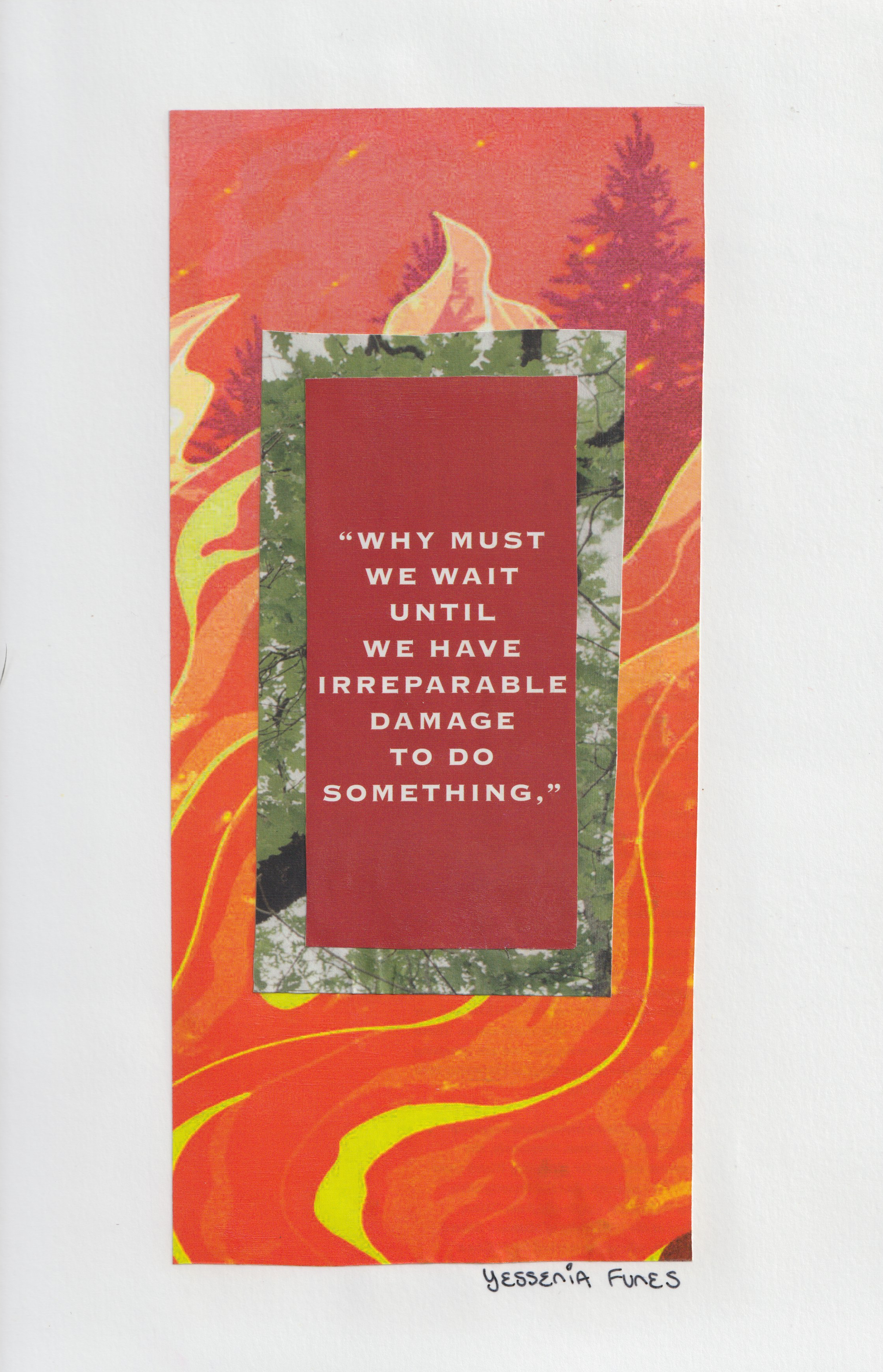
See you next week. xx
- Yessenia

Comments ()