

3 Years of Genocide and Ecocide

Support my work and upgrade to paid here for as little as $5 a month.
LISTENING: to the soft snores of my cat
FEELING: a little more raw and sad than usual
SEEING: the perpetual mess of my home
The olive harvest is just beginning across Palestine. Grandmothers, grandfathers, and their grandchildren are gathering in the groves, singing songs, and picking the fruit that has fed their people for generations.
Meanwhile, the Israeli army continues to terrorize the land and its stewards. These actions predate the brutality of Oct. 7, 2023 — and the genocide that followed. This week, Al Jazeera already reported olive trees ablaze and tools stolen. Settlers have attacked families, leaving at least one man, Hussam Adily, in critical condition. And a few weeks ago, Al Jazeera reported that the Israeli army bulldozed through rows of olive trees near Ramallah, the capital city of the West Bank.
"They don’t care about anyone, but God is up there, and we are steadfast here with our souls," said Palestinian farmer and landowner Abd Alfattah Tamimi to Al Jazeera. "They are uprooting, and we will plant again with the help of God."
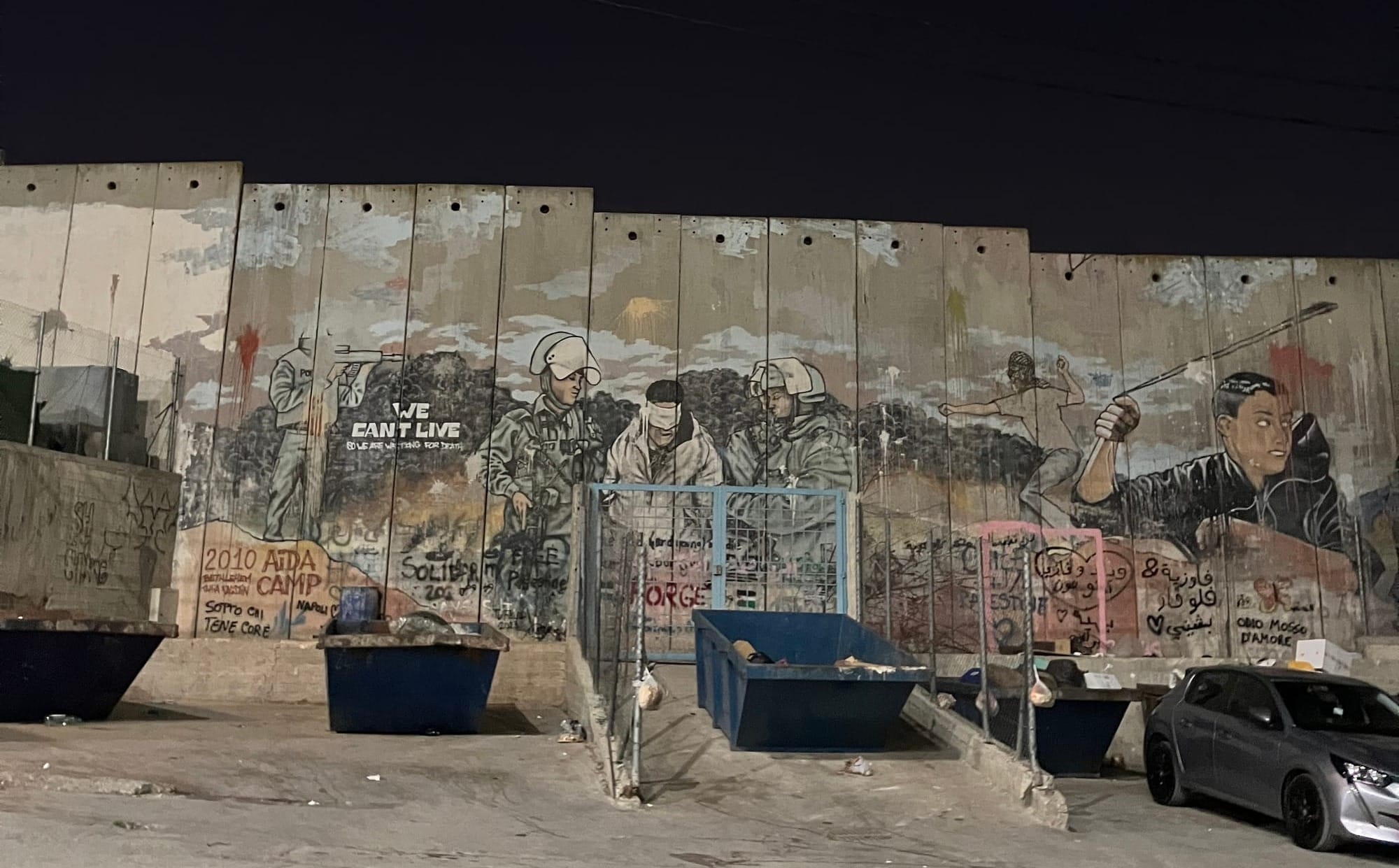
I've seen the rubble that Israeli military bulldozers leave behind. I've witnessed the scars on the land. I've heard the cries of families who grieve their trees and their livestock. Who have had everything robbed by settlers with hate in their heart. Who want nothing but peace yet know that peace won't come without a fight. Without a revolution. Without international solidarity.
But the story of the Palestinian people is more than loss. It's also about joy and wonder and culture and family. I met artists who find purpose in their mediums. Farmers who find calm in the soil. Children who can forget for a moment about their stresses when they're on the soccer field.
I think back on my trip to the West Bank over a year ago with love and sorrow. Most days, it feels like the international community has abandoned the Palestinian people. Sometimes, I worry that I, too, abandoned them — the people who gave me their time, endless cups of tea, their stories and traumas.
Then, I remember what has precipitated since then. I looked beyond the journalistic duties ingrained in me from my training. Instead, I listened to my duties as a fellow human. As a U.S. citizen with privilege and power.
I door-knocked for Zohran Mamdani. I and countless others got him elected as mayor. A Muslim. A Democratic socialist. An immigrant. A couple of weeks ago, he brought Palestinian families from Gaza into Gracie Mansion and planted an olive tree that will hopefully live on for generations to come in the city's mayoral homestead.
This is no little thing. Symbols are stories. And stories change the world. The biggest city in the U.S. is led by a man who believes in a free Palestine. A man who is not afraid to plant a seed that can bear fruit — fruit with a politics rooted in liberation.
More Democratic Socialists have begun to run for office with similar beliefs and commitments. And I think many of them might win come November. Not all. I'm not naive, but I have hope. I need to.
I believe — I must — that these walls will fall. I know I'll return to Palestine one day and see the hills without concrete blocking my view. I'll drive through villages without stopping at a checkpoint. Without pulling out my passport. Without a gun in my face. Families will unite. Gaza will rebuild. And they'll sing songs over the rubble. Maybe they'll plant trees there, instead. And I'll feel a similar relief when the walls dividing the U.S. and Mexico fall, too.
These structures divide us. And they disrupt our more-than-human kin. Genocide and ecocide are a choice our elected officials make. We, the people, have the power to force out the ones making those poor choices. We can make the world better. We can make the Earth healthier. And its inhabitants happier. These are the truths I hold close when the darkness threatens to stomp out my light.
From the river to the sea, Palestine will be free. 🌀
Currently Reading
While we're on the topic of walls, let's celebrate this one Texas town that managed to stop border wall construction, at least for now. From Shilpi Chhotray for The Guardian.
Mohammed R. Mhawish writes for The Nation: "Had Palestinians wanted remembrance after each date we experienced atrocity, a full, long year wouldn’t have enough days."
In her Substack, Anya Kamenetz writes about the complicated feelings of being a Jewish person on Oct. 7. I really appreciated her perspective. You can love your people and love your culture while also despising their actions and beliefs. Nuance is everything.
I read this story from Madeleine Aggeler for The Guardian first thing upon waking up and damn: "We live in grief-illiterate and grief-phobic societies."
A bright spot from Rachel Ramirez on the sovereignty of island nations facing erasure due to rising seas.
I can't believe Brazil is, yet again, succumbing to right-wing propaganda, but this interview between political philosopher Rodrigo Nunes and Carlos Pérez in Equator was helpful in understanding how.
My former student Saugat Bolakhe (who is Nepalese) writes a riveting account for Science News about the Nepal-Tibet glacier floods, speaking to survivors and preparedness experts.
Poetry
THE DAY THE WALLS FALL
the sky will sing
with the cacophony of birds
that couldn't fly between the beams
with the chorus of mothers
who cry for their daughters
oh, the sky will erupt
in celebration
the day the walls fall
and the concrete slabs
will go to museums
where we'll shame the architects
of these insane plans
and they will know the feeling
of being othered
and pushed to the side
of being treated like a demon
the oppressors will learn
the songs of liberation
they'll sing to their cracked walls
but the sky will not hear
no, the stampede of javelinas
and groundhogs
and jaguars
and hyenas
will be too loud
as they run wild and free
finally free—
like you and me
-ylf-
- Yessenia x

Comments ()