

Climate Week Highs & Lows

LISTENING: to this week's coffee shop banter near the Javitz Center
FEELING: excited about my next Climate Week event
SEEING: New York City carry on
I don't know how many of y'all listen to the songs I add here when y'all read, but I do apologize in advance for how explicit this week's is. This is my current hype song, and boy, do I need the energy!
It's Climate Week in New York, and ya' girl is tired. But we out here! If you remember, I got COVID-19 last year, so my Climate Week was a flop. This time around, my feelings have been all over the place. On one hand, the news has been killing me. On the other, I've gotten to see friends and meet sources. I guess that's just part of life, right? Balancing the highs and lows? Embracing both? Even when it hurts? Even when it burns?
º ⋱・♡ Donate! ♡・⋰ º
Want to help me pay photographers and writers to contribute to the newsletter? I've created an Artist Fund for anyone who wants to donate outside their regular subscriptions. Once I reach $100, I'll be able to license my first image from a photographer. Donate here. If you'd prefer to donate funds to whatever my needs may be (not explicitly the artist fund), you can donate here.
Welcome to Possibilities, a creative climate newsletter on the possibilities that lie where crisis meets community. I’m Yessenia Funes, and I'm here to give you the low down on what's been going on this week — in my world and beyond.
I wanted to start first with what's been bumming me out because, sigh, there is plenty. And when we're thinking about the kind of world we want to build — one where clean energy powers our homes and where prisons are abolished — we need to confront today's problems so we know how to dismantle them.
So, bad news? Here we go:
- On Tuesday, the state of Missouri executed Marcellus Williams, who was a 55-year-old Black man convicted in 1998 for killing a woman. In recent weeks, however, his attorneys raised questions over his trial and evidence, fighting for his innocence. Activists decried the execution as a modern-day lynching.
- In Florida, thousands are under evacuation orders as Hurricane Helene powered up to become the strongest storm we've seen so far this year. The state has reportedly moved just a few incarcerated people in the storm's path but has largely decided to shelter in place, per Fight Toxic Prisons, an advocacy organization focused on the intersection of prison abolition and climate/environmental justice. (Shout out to fellow EJ reporter Adam Mahoney whose initial tweet pointed me in the right direction!)
- Human rights group Global Witness put out its annual report on environmental and land defender deaths. Last year, 196 defenders were killed. The last 10 years have seen little improvement on the issue with over 2,100 killed between 2012 and 2023.
- EEE, the mosquito-borne illness plaguing the northeastern U.S., has caused one death in New York. Mosquitoes always come for me, so I'm pretty freaked out by this one. Anyone got a repellant they like that works?
So, yeah, my brain is a little overwhelmed by all that bad stuff. On the bright side, there's plenty of good to keep in mind, especially this week. I've been taking part in several panels and discussions — meeting people whose very existence reminds me that the needle can always move and injustice is not impenetrable.
Here's the good stuff I'm holding onto:
- I've been working closely with the Climate Psychology Alliance of North America to develop mental health resources for climate and environmental journalists. As part of that effort, we want to know how folks in the space are doing, so we've partnered with the Dart Center for Journalism and Trauma to put out this survey. If you're a journalist working in the U.S., please take it. You'll get a $15 gift card for your efforts!
- On Wednesday (which is the day I'm writing this), the White House announced the launch of an environmental justice climate corps. It's meant to place over 250 AmeriCorps members into communities of color suffering the health impacts of pollution. I'm super curious to see how this will turn out.
- I've been taking part in this ferry talk series with Holes in the Wall Collective, a creative nonprofit partnering with local activists and breweries to create beers whose proceeds would support the activists. It's been so amazing to meet new climate advocates whose work I hadn't heard of before — including Karen Blondel, a public housing advocate in Brooklyn, and Liz Paredes, Candace Thompson, and Journei Bimwala, all of whom work on issues related to food sovereignty and foraging. This has been such an enriching experience. Both because it's forcing me into parts of the city I hadn't seen before and because it's introducing me to movement-makers I plan to follow more closely.
- On Monday, I took part in two events with Global Witness: one panel on how media is one-sided and another I moderated unpacking the dangers of mining transition minerals in Indigenous communities. One big takeaway from the second panel, featuring Indigenous activists Don Clemente Flores from Argentina and Joan Carling from the Philippines, was that businesses can't regulate themselves. We need governments to step up and step in to protect their constituents. The private sector will always choose profit. And the communities facing human rights abuses need more than lip service. The activists on the panel reminded me of why I do this work — to give folks a mic and amplify their struggle.
Our stories are all different, but we all know the struggle. It's what brings us together. And, man, do I know it well.
As a kid, my parents would tell me to play only in the backyard. The front was too dangerous. One morning, I woke up and our living room TV had been stolen in the middle of the night. When we finally moved out of that situation, we all shared a room — me, my two siblings, and my parents. We didn't have any extra space, so when my uncle arrived to live with us from El Salvador, he had to make the living room his bedroom.
That wasn't my life forever, but I have core memories of this period of time, which only ended once my parents saved up enough money to buy a house (which we eventually lost because mortgages cost money, too, and who has money?!).
We need more journalists like myself covering these issues. We need more people across all sectors who know the class and migrant struggle. We need them in the justice system to protect those who are wrongly incarcerated. On emergency disaster response teams to ensure that everyone is safe when hurricanes or wildfires or heat waves hit. At tables on The Hill where people in suits (largely cis white dudes who have known the lowest level of struggle) are deciding our futures.
That's why I'm really excited about this survey we're launching with the Dart Center and CPA-NA. In order to keep more folks of color in the climate journalism space, we need better mental health resources. We need to know how bad things are — and what it'll take to make them better.
Be sure to share the survey link with every journalist you know covering the issue! And tell them to share it, too! 🌀
Rest in Power
While we can't say for certain that climate change led to these specific weather events (we need attribution studies for that), we do know that the Earth's rising temperatures are already creating more disasters like these.
Over the weekend, floods tore through Japan and killed at least six people.
At least four people are dead in Mexico this week after mudslides fell from Hurricane John.
A severe storm hit central Vietnam this week, leaving at least three dead. This comes at the heels of Typhoon Yagi, which killed nearly 300 dead in the country.
The death toll from the European floods I mentioned last week is up from 19 to 24.
Currently Reading
I just met with Dana Fisher, who co-authored this important piece alongside activist Alice Hu on how the Harris-Walz campaign needs to think deeper about its fracking messaging.
Debbie Nathan for The Intercept: "It used to be fairly rare to call human beings migrants. From the 16th to 19th centuries, the word mostly referred to birds and other animals that moved back and forth between different climates and terrains every year, not from desire or planning but from pure, immutable instinct."
Jessica Kutz does it again over at the 19th. I really appreciated this original piece from her on how social isolation is making older men in the U.S., in particular, vulnerable to extreme heat. It made me think of my father, who lives alone in Texas where extreme heat can be deadly.
Collage
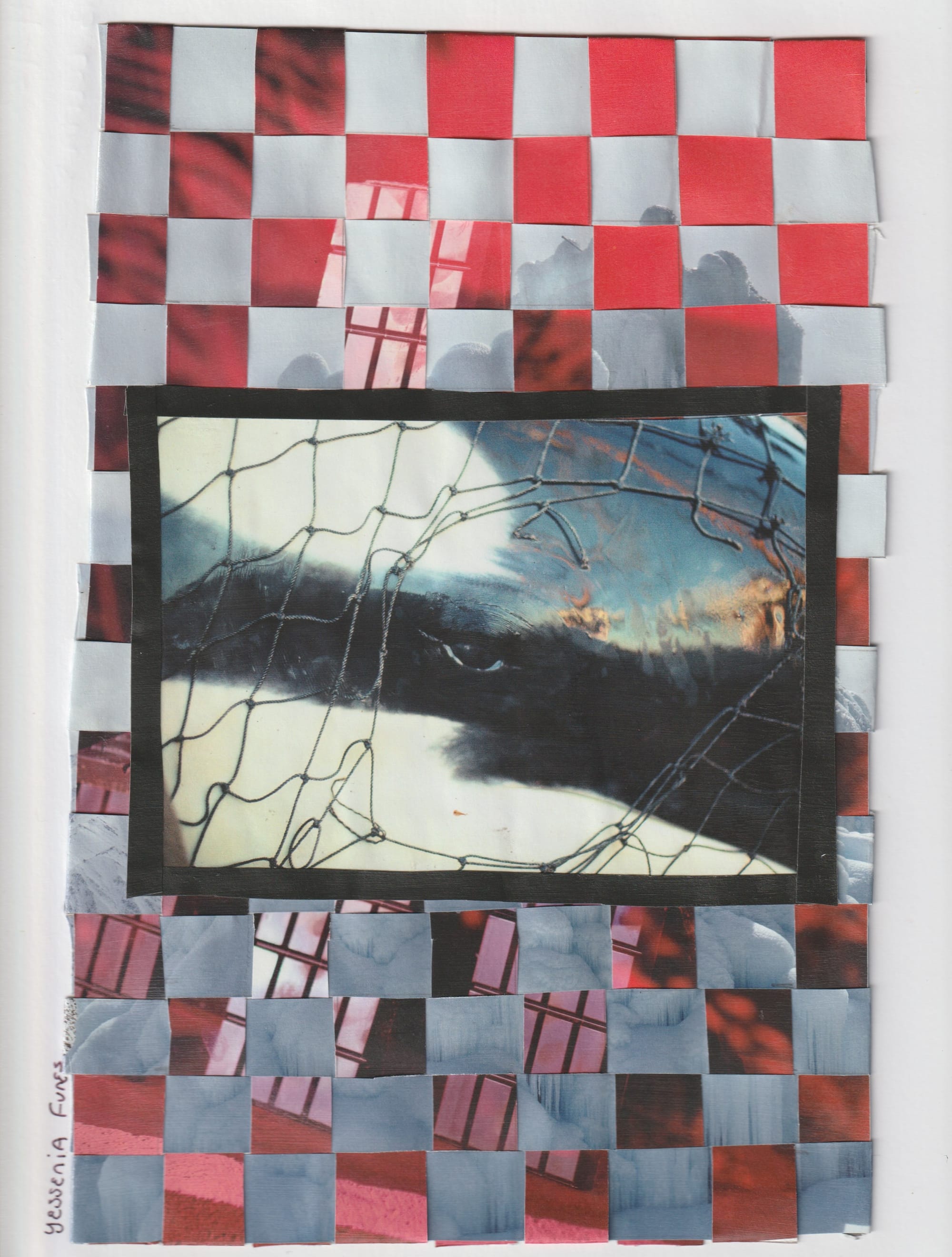
At my Global Witness event, I met a woman from the Lummi Nation who was a relative of Lolita. I'm thinking of their people — and of the spirit we lost, so close to her freedom.
Here's to the second half of Climate Week!
- Yessenia xx

Comments ()