

Stitched by Hand

This edition features original reporting. Paid subscribers should upgrade to paid here for as little as $5 a month to read in full.
I like that you have a beat but also have a nice mix of types of writing/stories/art. It's one of the more fun newsletters to open. It's like getting real mail when your mailbox is full of junk mail!
LISTENING: to some jams
FEELING: better :)
SEEING: my rainbow flag begging to be hung outside
This week, I published a story with Atmos and HEATED on the ways fossil fuel billionaires are funneling their dollars to right-wing groups pushing anti-trans rhetoric. I encourage y'all to read the piece in full, but here's a little excerpt.
An independent analysis of 45 right-wing groups advocating against trans rights found that 80% have received donations from fossil fuel companies or billionaires. The analysis, conducted by two independent researchers in 2023 and not peer-reviewed, was shared exclusively with Atmos and HEATED. Through a qualitative search, the researchers identified 45 groups advancing anti-trans lobbying, events, and publications and checked reports about their donor disclosures for fossil fuel funding.
Wild, right? This type of analysis is especially needed during Pride. And during the heartbreaking ICE raids in our cities. I wanted to dive deeper into the climate x LGBTQ+ connections, so I called up Vanessa Raditz, a queer climate justice researcher and educator.
Welcome to Possibilities, a creative climate newsletter on the possibilities that lie where crisis meets community. I’m Yessenia Funes, and it's Pride, baby!
A conversation with Raditz a few years ago now led me to this data on fossil fuel dollars and anti-trans legislation. They also shared something in a separate conversation last year that has stuck with me, especially during this month when rainbow flags are flying everywhere.
"Waving plastic polyester flags with dyes that have polluted the waters somewhere I know queer people are living is such a pain for me to witness and also is an injustice to the memory of our ancestors and the very creative ways they showed their pride and made amazing art outside of consumerism," they said.
No shade to our flags. I love mine! But what if we gathered in ritual to dye our own? And not the mainstream red, orange, yellow, green, blue, purple flag. What if we set aside time with our community to dye a trans flag in baby blues and pinks? And what if we connected back to the earth while we're at it?
That's what Raditz and I got into.
Paid subscribers make this work possible. Upgrade your subscription here to read the full interview.
Subscription FYIs
You can always adjust your subscription here. The newsletter has several tiers, so if you're able to give more or need to give less, please adjust it as you see fit.
I'm also giving paid subscribers a first look into my children's book. I wrote about this last year, but here is the landing page where I'm keeping track of all the editions where you can find what I've shared so far. Send agents my way!
< Your short ad could go here. >
C'mon, you know this would boost your biz. Buy an ad here.
This interview has been lightly condensed and edited.
YESSENIA FUNES: In these times, what does Pride mean to you?
VANESSA RADITZ: Oh, Pride is a time for us to sit with our elders and remember our history and how we got to the moment that we're in now. Even with the rollback of so many of the wins of the past 50 years, Pride is an opportunity to remember that things have been worse. We don't have to start from scratch. We have a wealth of fabulous knowledge to draw upon.
YF: Beautiful. So much of your work is about connecting queer issues with the climate crisis, building those bridges. Do you see any opportunities during the month of Pride to uplift those intersections and connections?
VR: Absolutely. Pride is a time for us to gather together, not just in the big public parades and festivals although a good party is a really great way to raise the spirits. Queers for Climate Justice, a group I helped start, we've been encouraging people to use this as a time to gather with your pod — the people you care for who care for you — and to start planning for fire season on the West Coast or hurricane season on the East Coast. It's a good time to think seasonally.
The idea of gathering people together to hand dye their own flags is part of this reclamation of the creativity, the arts, the DIY ethos of a lot of the early queer movement.
YF: That sounds really smart — to do disaster prep during more community and fun time.
VR: Yeah, exactly, and to make a routine out of preparedness. To recognize the planet we're on and what it's going through — and what that reality means for us.
We have this well-rehearsed line at this point that we take care of us, right? Which is a recognition that the government and other major institutions have never really been for queer and trans people and our flourishing. We have this long-standing tradition of taking care of each other. Well, what does that mean now on a rapidly changing planet? It means being prepared. So without sensationalizing it, without gathering out of fear or anticipation, just making it a routine to get together and check in with each other: What do you need? What do you have? How do we do this in community so that we are less alone and maybe less afraid?
YF: Trying to alleviate that fear feels crucial. Part of what keeps people from taking that first step is that fear. On the topic of the flag, it is such a hallmark of Pride. How do you see the way it's been commodified contradict the definition you offered of Pride?
VR: Well, it's such a sad co-optation. The rainbow flag was one of the first symbols of a highly visible queer movement associated with Harvey Milk's campaign to run for public office. Its intentions were always to be waved and visible. We now see the rainbow flag all over the place, but in its commodification, it lost a lot of the symbolism that was initially stitched by hand by these really creative people.
That is what's so special about the first rainbow flag: This massive flag was created by hand. It initially had eight colors, and each of those colors had a particular meaning. Green was for nature and an earth-based spirituality. The original flag also had this bright hot pink, which symbolized sex and sexuality and the erotic, and this bright blue, which represented magic. The process of turning this flag into something commodifiable required mass manufacturing. Remember, it was about visibility. They wanted it everywhere. They wanted everyone to have one, to be able to bring it to protests.
It turned out that dyeing that bright hot pink and this bright turquoise blue was very expensive. So the Pride flag went from eight colors down to six, the ones we now know. The saddest thing about that is what we lost. We lost the sex, and we lost the magic. It's like a metaphor for the compromises we've made as a movement in order to seek visibility within a system reliant upon colonial, racial capitalism and the exploitation of workers and the earth and this race toward the bottom line. We've had to make enormous sacrifices that don't seem to have panned out in the long term.
The idea of gathering people together to hand dye their own flags is part of this reclamation of the creativity, the arts, the DIY ethos of a lot of the early queer movement.
If we think about it from an EJ lens, the production of these Pride flags — the symbol of our commitment to our communities — is poisoning other communities, which likely include queer and trans people.
YF: I love that. How does making your own flag help reconnect us back to the earth and what Pride was always meant to stand for?
VR: These flags we have the most access to right now, they’re made with synthetic materials that come from fossil fuels, which readers will know from one of your recent articles are driving anti-trans policies. So much of our synthetic world also comes from fossil fuels, and its production is toxic, particularly for the workers and the people who live around the production facilities.
If we think about it from an EJ lens, the production of these Pride flags — the symbol of our commitment to our communities — is poisoning other communities, which likely include queer and trans people. It's important to be able to remember that materiality. Sometimes, there can be a tendency to feel shame or guilt when acknowledging the violence of global production and mass manufacturing, but it’s not about blaming each other. It’s about recognizing and bearing witness to the reality and choosing to do something that helps us remember that things can be different. We can reclaim a world for our creativity.
One of the things that’s great about the trans flag is that it's remarkably easy to make with natural dyes. These are the colors our ancestral communities have used to create garments for centuries. We’re creative people who like to adorn ourselves.
Like with all things arts and crafts, it's about the process, not the product. If it doesn't come out perfectly, that's great. It's individual to the batch you brew. That's a great metaphor for who we all are. We're not a cookie-cutter model. We're a particular product of the context and space. Mistakes are beautiful.
Natural-Dyed Trans Flag Recipe
Please do this in a kitchen with good ventilation or even a camping stove outside. Boiling cabbage can be a smelly endeavor. Cabbage is also a "fugitive dye," so fabrics dyed with the vegetable can lose their color if washed or exposed to sunlight. This recipe is best for a piece you want to hang inside.
Materials:
- Long strips of white fabric (natural fibers like cotton will take up the dye the best. Plastic fibers like polyester or tulle won't dye as well. Consider going to a thrift store to find old white cotton sheets!)
- Sewing needle and thread, or a sewing machine if you don't want to do it by hand
- Large soup pot for boiling the cabbage
- Two large bowls or pots for dyeing the cloth (one for pink, one for blue)
- Strainer
- Tongs
- Rags/old towels to clean up spills (might get stained)
Ingredients:
- One head of red cabbage, chopped
- Baking soda (to make the blue)
- White vinegar (to make the pink)
- Salt (as a stabilizer to help it set in the fabric)
- Water (you can get distilled water if you want to ensure it starts at a neutral pH, or you can use your tap water and just adjust the amount of vinegar and baking soda depending on what color the mixture starts
Instructions:
- Boil the water in the large pot with salt. Turn it down to a simmer and add in the red cabbage. Simmer for at least 1 hour. For a deeper color, keep simmering for 4 hours until the cabbage looks pale and drained of color. Keep an eye on the stove and top up the water if it gets low.
- Let the water cool slightly so that it is not scalding but still warm. Strain into the two bowls so that there is about an even amount of the cabbage water in each. Note that the color of your initial cabbage water will depend on how basic/acidic your tap water is.
- For the bowl that will be the pink dye, add some white vinegar to the cabbage water. Add about 1/2 teaspoon vinegar at a time until you get the color you want.
- For the bowl that will be the blue dye, add some baking soda to the cabbage water. Add about 1/8 teaspoon baking soda at a tine until you get the color you want. If the color goes too far toward green/yellow, add a small amount of vinegar (1/2 teaspoon at a time).
- Add about 2/5 of your fabric strips to the pink and 2/5 to the blue (keep 1/5 separate for the white band in the middle of the flag). Submerge the fabric, stirring occasionally and checking the color (If the water starts turning purple again, add a bit more vinegar or baking soda and stir). The longer it is in the dye bath, the richer the color will be. Keep it in for at least an hour, but consider keeping it soaking overnight for deeper color shades.
- Take out the cloth and wring it out by hand. Let it hang dry somewhere shaded (not in direct sun). Don't rinse the fabric. Washing will fade the color quickly, and the pH of the water could impact the color.
- Once they are dry, you can assemble your trans flags! Cut and sew your pieces together, with white in the middle, flanked by pink, flanked again by blue on the top and bottom.
- Hang inside on your walls with pride! Keep away from windows or bright lights to keep the color for longer.
More tips and points:
- When you feel more comfortable with dyeing, you can get into more advanced techniques for more lasting dyes, like using mordants on your fabric before dying, and trying out different kinds of dyes.
- For other easy ways to make light pink, consider avocado pits, blackberries, or beetroots. For the most colorfast natural pink dye, look into a very short wash in diluted madder root.
- For other easy ways to make light blue, consider using black beans, cornflower, hyacinth, or purple iris. For the most colorfast natural blue dye, use a very short wash in diluted indigo.
Rest in Power
While we can't say for certain that climate change led to these specific weather events (we need attribution studies for that), we do know that the Earth's rising temperatures are already creating more frequent and/or stronger disasters like these.
Deadly floods have hit South Africa, killing at least 49 people, including six high school students whose bus was caught in floodwaters.
In northern Vietnam, flash floods have led to at least one death.
Currently Reading
Here is my latest story for Atmos and HEATED in case you missed it above. Related to my investigation, Grey Moran digs into the meat industry's ties to anti-trans campaigns for Sentient Media.
The intersection of war and the environment is one of the most urgent ones to look at. Chad Small covers this topic for Grist, looking at forest loss amid Russia's invasion of Ukraine.
Disaster season is here: wildfires, hurricanes, floods, extreme heat, air quality alerts. Ugh. Molly Taft tells us what we need to do to prepare for WIRED.
Loved this quote in Lex McMenamin's story for The Cut about D.C.'s WorldPride weekend: "Bury your friends in the morning, protest in the afternoon, and dance all night."
After reading Gabrielle Canon's story for the Guardian about the Klamath River, I'm ready to go rafting!
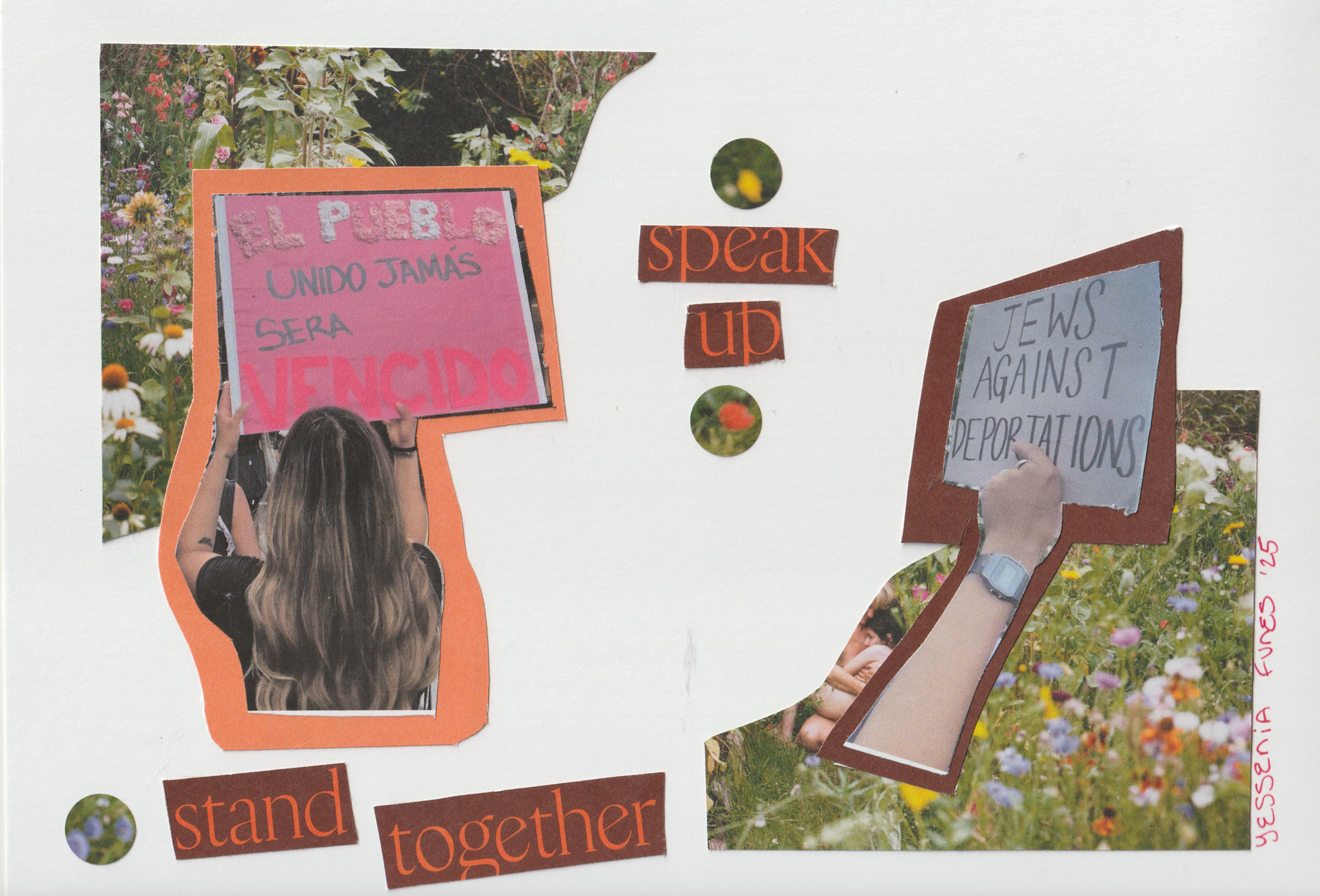
Collage
Thanks for reading. Forward this to someone you want to plan a flag dyeing party with.
- Yessenia

Comments ()