

The Infinitely Sacred
This edition is available only to paid subscribers as it includes original reporting. If you want full access, upgrade to a paid subscription here.
LISTENING: to the silence!
FEELING: oh so very anxious
SEEING: my very messy desk
Feels like every week, a new fire is burning. The weekend saw a terrifying display of tornadoes, wildfires, and dust storms out of the Midwest. More than 40 people died. A week ago, the wealthy Westhampton enclave of Long Island, New York, saw its own wildfires. Slowly, we are all beginning to grow familiar with the threats dizzying flames and smoke bring.
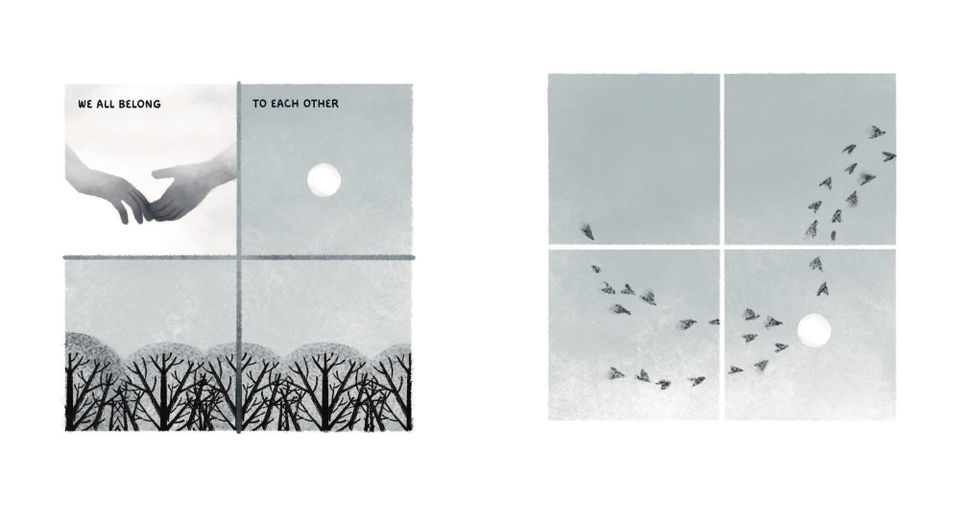
Madeleine Jubilee Saito's debut comic collection, "You Are a Sacred Place: Visual Poems for Living in Climate Crisis," opens up with the heaviness of living through another hot summer and smokey fall. The cartoonist and author doesn't waste a second in this book to dig deep and unpack the visceral emotions of living through climate crisis.
I've been a fan of Jubilee Saito's for many years now. I first saw her work in 2020 when she was published in the best-selling eco-feminist climate anthology "All We Can Save." I was immediately drawn to the storytelling style of her comics. There was always wonder and nature and togetherness. She says so much with so few words. She lets the art speak for itself sometimes. But she's also direct and vulnerable.
Her new book, out March 25, is a lovely addition to any coffee table or bookshelf, but it's more than eye candy. It's a spiritual delight that reminds us to reach out, reach in, and rise up.
"I believe in the power of art to remind us of our sacredness and to bring us back to the sacred in ourselves, in each other, in the natural world." -MJS
You are a sacred place. So am I. As are the lands we stand and build upon. The spirit inside us and the spirit that drives this world forward are sacred. Her book reminds us not to take that for granted — her artwork reminds us to fight, but also to dream and imagine the possibilities that lie ahead.
I interviewed her for this week's newsletter. The news is nonstop, but we could all use a break from the awfulness to stop and appreciate art and artists, especially in moments like these.
Paid subscribers, you make this work possible. Everyone else, upgrade your subscription here to read the full interview.
< Your short ad could go here. 200 characters or less. >
Forget sending me a press release I'll just ignore. Buy an ad here to get your product in front of my readers for a small price.
This interview has been lightly edited and condensed. We're opening with what Madeleine Jubilee Saito is listening to, feeling, and seeing, per the Possibilities tradition.
LISTENING: to the gentle hum of an air filter
FEELING: 20 percent dumber than usual because of a bad night's sleep
SEEING: a beautiful, cloudy Seattle day
YESSENIA FUNES: For those who don't know your work, can you introduce yourself, please?
MADELEINE JUBILEE SAITO: I am a cartoonist and artist. I work in the medium of comics and, specifically, poetic comics. I've also been around climate movement spaces for about a decade. A lot of the work I do is visual poetry about climate justice.
YF: Why visual poems? How did you get into this specific medium? It's so niche.
MJS: I've always been interested in making comics. When I was in high school, making little comics felt like a way to take the mundanity of daily life and make it magical and meaningful to others. In the 2010s, I joined this artistic movement called Comics Poetry or Poetry Comics. I started moving away from work that was purely autobiographical and direct and experimenting with other forms of comics, exploring the ways that the images, the text, and the panels — every part of the comic — could work together to create poetic meaning.
YF: And how did climate change become a part of that work?
MJS: I first started making comics that were specifically about climate in 2019. I was really longing for art that looked at the climate crisis through an ethical, spiritual, and emotional lens because in the environment I grew up in, climate was seen as very clinical. It was this realm exclusively of policy wonks and dispassionate white guys.
YF: 2019 was the year that the U.N. put out that big report saying, "We have 10 years left to address climate change." 2019 was a revolutionary year for a lot of people. I think about the youth climate strikes, so it's interesting that that's also when you started making art around the issue given the wave of science and advocacy and fear that hit many of us around climate change then.
The book, at times, feels quite heavy and dark, especially the opening. How much of this work is autobiographical? I can't tell sometimes who the "you" is and who the "I" is, whether you're talking about yourself or about loved ones.
MJS: The book opens with a one-sided conversation with a loved one. This was inspired by 2021. A loved one was laid off, and at the same time, Seattle was just filled with smoke. Then, the mask mandates in grocery stores were suddenly lifted. It was just this poly crisis of feeling completely worthless — because that is how the system functions when you're out of work — and then also feeling this horror of the wildfire smoke and then also feeling trapped. Not being able to go in public spaces for fear of becoming infected with COVID.
And that experience was both very visceral in how horrible it was altogether and also like a microcosm of the way that capitalism's extraction of people comes from all sides. It's all the same process: workers being extracted from and then laid off, the environment being extracted from and the wildfires as a result.
Part of the experience of being at the center of all of that extraction is a feeling that, "Maybe my life is worthless, and I shouldn't be here anymore." The rest of the book is my answer to that. I find it easiest to make work when there's something to respond against. This experience of all these things happening together was what I wanted to respond to. How do we think about this very reasonable reaction to the multiple sites of extraction that all of us, who are workers, are experiencing all the time?
YF: Your response to that is quite effective and moving. Sometimes, it's clear that there's tension in the book about how to navigate the heaviness of a situation while also coming back to oneself and community. I remember there was a passage about sharing oranges where you presented the question of what if we created a different way of living, right? It was a reminder that all of us have a role to play, and all of us have our worth to offer. If we come together, then it's much more powerful and beneficial than going at it alone. That's one of the takeaways I got from the book.
I'm curious — because this newsletter is about possibilities, specifically the possibilities that lie where crisis and community meet — how do you see art playing a role in that intersection?
MJS: I believe in the power of art to remind us of our sacredness and to bring us back to the sacred in ourselves, in each other, in the natural world. That feels like such a solid ground to stand on for living through these crises and navigating the onslaught of all the fascist bullshit that is flying at us right now.
YF: I feel like so many of us have lost sight of that sacredness. What do you mean when you say that?
MJS: It feels almost easier to describe in the negative. The ways that workers are exploited and laid off suggest that they are waste and excess. And the reality is that each person's life, each inner life, is infinitely sacred. I'm a Christian, and this is a deep value that I take from the Christian tradition: the infinite and specific sacredness of every human being and the infinite and specific sacredness of every piece of the nonhuman world.
YF: As someone who's not religious, I'm struggling to understand. When I hear sacred, I think of how so many of us have lost sight of just how remarkable our existences are and just how miraculous it is that we're here in this moment. I'm not religious, but I am quite spiritual when I think of just the wonder of it all, right? How did we end up here? Or isn't it amazing that I'm here with you and that we can share our experiences? So when I think of "you are a sacred place," I think of all those inner workings that make us ourselves and make us living, breathing people with feelings and emotions and thoughts and dreams. And the person next to us, similarly, has their inner world that is their own that allows this planet to take shape the way it has. Is that how you understand us to be sacred? Because I do think a lot of people don't even think of humans that way, unfortunately.
MJS: Well, I think you got it. How I would define sacred is infinitely precious.
YF: Is there anything more you want to share about the ways this book connects back to climate justice?
MJS: A thing I really wanted to say with this book is this core principle of climate justice, which is that we are part of the natural world. We are not separate from it. Our well-being is interconnected with the natural world. And if the natural world is good and beautiful, then so are we. 🌀
I'm heading to Palestine in a few weeks to join a climate justice delegation and get some reporting done from on the ground. Consider donating to our fundraising efforts here. If you're an editor and want a story, let me know!
Subscription FYIs
You can always adjust your subscription here. The newsletter has several tiers, so if you're able to give more or need to give less, please adjust it as you see fit.
I'm also giving paid subscribers a first look into my children's book. I wrote about this last year, but here is the landing page where I'm keeping track of all the editions where you can find what I've shared so far. Send agents my way!
Rest in Power
While we can't say for certain that climate change led to these specific weather events (we need attribution studies for that), we do know that the Earth's rising temperatures are already creating more frequent and/or stronger disasters like these.
The devastation in the Midwest over the weekend has left at least 42 people dead.
Currently Reading
Sometimes, I just need to read about awesome science and discoveries. This short article from Dino Grandoni for The Washington Post did just that.
Conquest used to be the international norm. Not anymore, Kerry Goettlich reminds us for Aeon.
Jenna Wortham is always worth reading in The New York Times Magazine: "The survival I came to know on this trip was about something completely different. It was, above all, about letting yourself be affected by the changing world around you. Not just riding it out, but adapting, molting. Not succumbing to the luxury of despair, but keeping a foothold in possibility. Not blocking the world out, but letting it in."
I'm keeping up with all the Mahmoud Khalil news, including this important piece in The Intercept by Shawn Musgrave.
I'm a sucker for great journalism, and this Boeing deep dive by Lauren Smiley for WIRED was so well-done. Gonna' do my damnest to avoid the 737 Max planes from now on.
I still haven't finished this long read by Anita Hofschneider and Jake Bittle for Grist, but every environmentalist needs to know the decades-long and Indigenous-led history behind the removal of the Klamath River dams.
Jasmine Mooney is a Canadian whom ICE held for weeks. She's finally speaking out in The Guardian: "Even in the darkest places, within the most broken systems, humanity persists. Sometimes, it reveals itself in the smallest, most unexpected acts of kindness: a shared meal, a whispered prayer, a hand reaching out in the dark. We are defined by the love we extend, the courage we summon and the truths we are willing to tell."
Collage
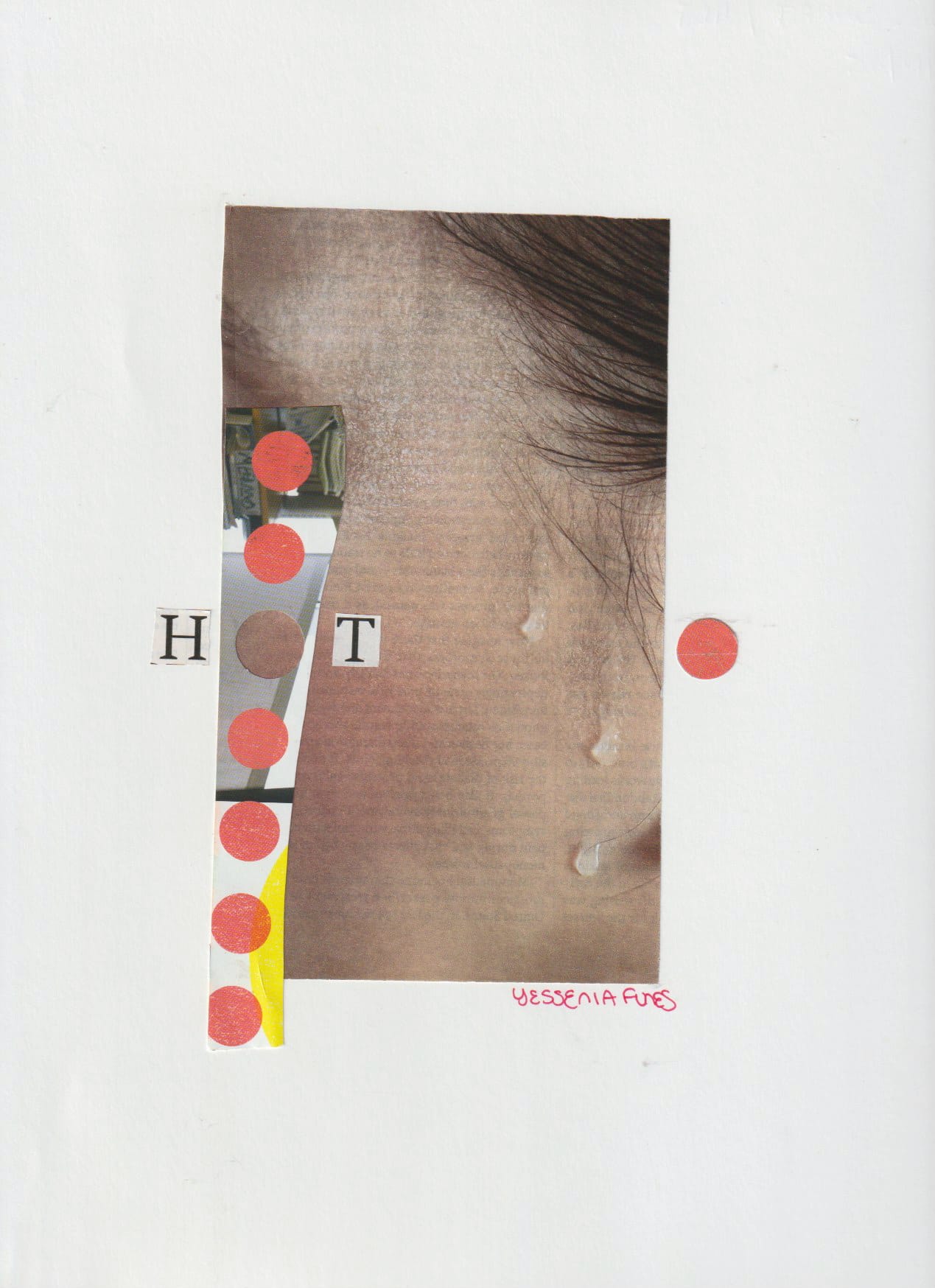
I've got so much work to do these next few weeks. Appreciate you all bearing with me. I'll have survey results ready in mid-April!
- Yessenia

Comments ()