

Chasing Gold

This edition includes original reporting and is exclusive to paid subscribers. Update your subscription here for as little as $3 a month. And thank you to all who support this work. You make writing this every Wednesday worth it.
LISTENING: to my 2024 Spotify wrapped
FEELING: grateful for a new year
SEEING: my inbox pop off with endless deals 😵💫
Last week, I sat at my Thanksgiving Day table with the fam, enjoying my wine, when my aunt brought up some news about El Salvador. "The president found gold! The country is finally going to be rich!" I looked at her, confused. "Tía, El Salvador has banned mining," I said to her in Spanish. "If Bukele found gold, he's not supposed to touch it."
She looked at me even more confused. "Well, he wasn't looking for gold. He was looking for petroleum, and this is what they found. This is great!" I didn't feel like arguing at the dinner table. This was, after all, an aunt who voted for Donald Trump despite having crossed the border illegally herself just a few decades ago. So I let it go. And I turned to Google.
She was right: On Nov. 27, 2024, President Nayib Bukele took to X, formerly Twitter, to share that the gold reserves beneath El Salvador were valued at up to $3 billion. He called the gold a "treasure" gifted by God. He went on that mining and developing the resources could boost the country's economy and become a source of jobs. He noted that "modern and sustainable mining" could allow the country to tap the gold without harming the reserves. Hm. If it sounds too good to be true, it usually is.
Welcome to Possibilities, a creative climate newsletter on the possibilities that lie where crisis meets community. I’m Yessenia Funes, and I'm so proud that my ancestral homelands of El Salvador are the only lands in the world where it's illegal to mine for metals.
Now, however, the Bukele administration wants to reverse that ban. The country's Roman Catholic Church, which is highly influential in El Salvador, called on the president to leave the ban in place.
“It will damage this country forever,” said Archbishop José Luis Escobar Alas, per the Associated Press.
The issue is that Bukele has a supermajority in Congress. He also replaced the country's top court judges to make them more friendly to his party. Bukele is free to do whatever the hell he wants. Well, if the people let him.
I've reported on this issue before. Activists in the country have been preparing for this moment, especially since the arrest of five water protectors who helped make the mining ban possible back in 2017. So it didn't come as a surprise to me when my aunt mentioned this update. Where do they go from here, though?
 Atmos
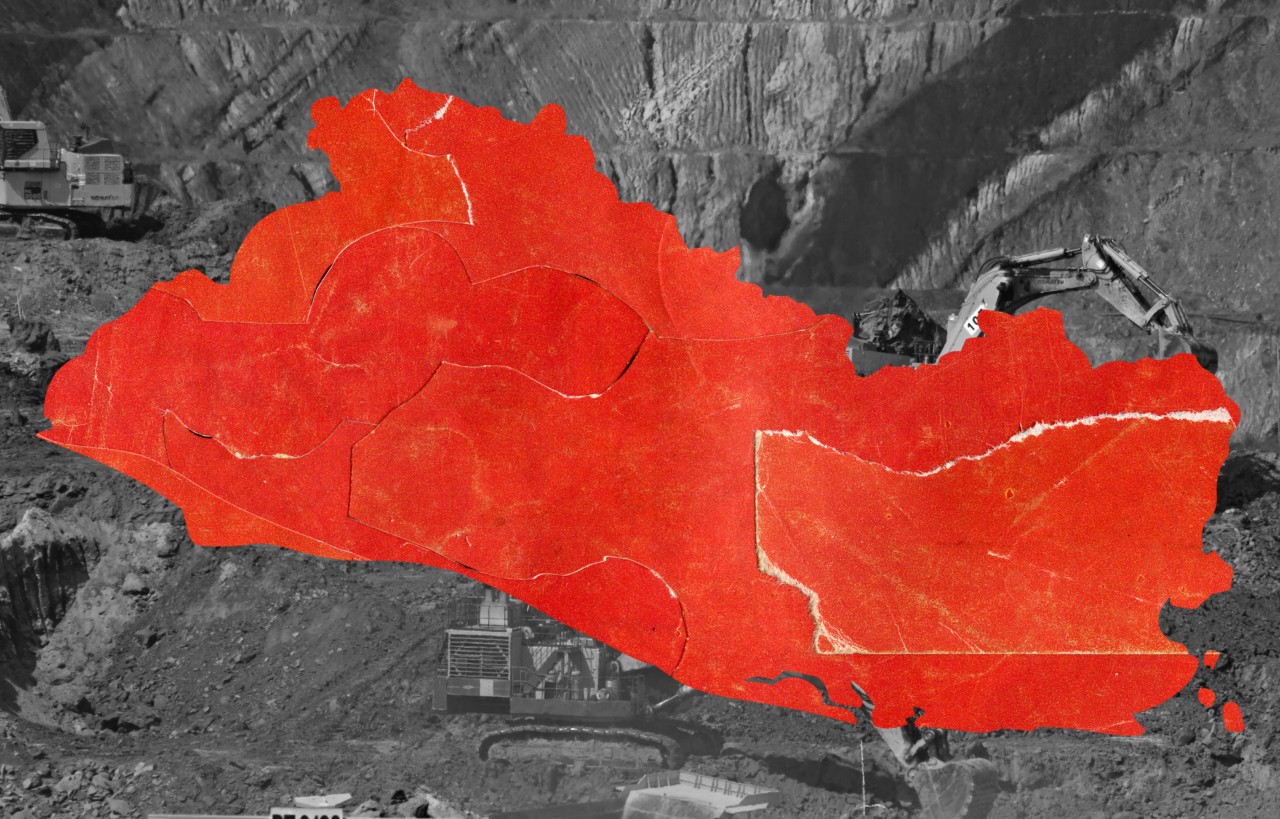
I spoke to Pedro Cabezas, coordinator of the Central American Alliance on Mining, which is organizing against industry in the region, and he made clear they won't stand idly by when the president makes his move. He's expecting the president to pass a law reversing the law any day now. It could be as soon as Thursday, the day you read this newsletter, or during the holidays, he expects. We'll have to wait and see.
From there, however, the process will likely take a few years as companies purchase land concessions and put together contracts to begin their mining operations. Before any exploitation can start, they would need permits and environmental assessments.
What Cabezas is worried about is the country's state of exemption, which allows the police to arrest anyone they want without giving them due process in court. This is how the five water defenders were incarcerated a few years ago. The president has gotten away with this by telling the people this is how he has kept gangs off the street. But how will protesters be treated under this state of exemption?
"The state of exemption should only last a week when there's a crisis, but now the suspension of these legal rights has become the norm in this country," Cabezas told me in Spanish. "It's dangerous for people who oppose the mining."
The last time the people stood up to gold mining, people died. One victim was Dora “Alicia” Recinos Sorto, who was eight months pregnant when she was killed in 2009. "But this doesn't mean we won't organize or fight," Cabezas told me.
The country needs its scarce water sources to be free of the toxins that come with mining. The organizers' campaign will begin with informing and educating the public — and reminding them why their country banned mining in the first place.
It's like I told my tía at the Thanksgiving dinner table last week: "Money is one thing, but life is another." 🌀
Rest in Power
While we can't say for certain that climate change led to these specific weather events (we need attribution studies for that), we do know that the Earth's rising temperatures are already creating more disasters like these.
In Greece, Storm Bora has left at least three dead this week.
In Sri Lanka and India, at least 20 people are dead after Cyclone Fengal brought rain and landslides to the region.
Meanwhile, monsoon rains in nearby Malaysia and Thailand have killed at least 31 people.
The strange heavy snow to hit South Korea last week has caused the deaths of at least five people.
Last week, severe rains caused an awful landslide in Uganda, killing at least 28 people.
Currently Reading
Kansas's Black working-class communities deserve more than a legacy tainted by toxins and pollution. Willy Blackmore has the story for Word in Black.
Nieman Reports hears from journalists across the globe who have stood up to dictatorships and assaults on the free press: "Journalists are the fiercest, most tenacious species on earth. They will stay. And they will write the most compelling stories." Another gem from Rappler co-founder and executive editor Glenda M. Gloria: "In the face of tyranny and the digital manipulation of societies, there should be no line between journalism and activism, only a bridge. It’s called citizenship."
The Guardian's Nina Lakhani has an important story on the U.N. standing with two climate activists. I was there the day these protesters were arrested. It's chilling to see how governments are normalizing the criminalization of First Amendment rights.
Hurricane season is over, but the 2024 season will go down in history as one of the deadliest yet. From Dinah Voyles Pulver at USA TODAY.
Book Preview VI
In a quiet village, along a ravine, there were two curly-haired sisters who liked to skip and scream.
Sandra and Sara were silly, sweet, and sour, as most sisters are.
Their laughter was their superpower, a song everyone loved.
The two sisters loved nothing more than stomping in the mud.
The rains would come, and the ground would bounce like a sponge.
The dirt would feel all wet and slimy, covering their boots in rich, brown gunk.
“Oh, clouds, we hope you cry today!” the girls yelled into the sky.
They had their yellow raincoats ready, but their plan went awry.
The rain didn’t stop. The clouds cried and cried.
Days went by, and the skies didn’t dry.
Read more about my book-writing efforts here.
I know I promised you all a list of the books I've read this year, but this El Salvador development was too important to skip. I've got you next week. Hopefully, you'll have some new ideas for holiday gifts after seeing the books I got through!
- Yessenia

Comments ()