

Migration Is Black History
This edition is available to all (except the paid exclusives). Support my work and upgrade to paid here for as little as $5 a month.
LISTENING: to my cute lo-fi pomodoro timer on youtube
FEELING: overwhelmed! so much to do!
SEEING: all my mess pile up
Black History Month is almost over. One group doesn't get enough attention this time of year: migrants. In the U.S., most Black people you meet are migrants or descendants of migrants. Migration doesn't have to be voluntary for a person to be a migrant.
Look at history and the millions of Africans human traffickers forcibly brought to the U.S. to be enslaved. They didn't choose to come, but they had to build lives here despite the violence and trauma. Today, their descendants carry on in the face of ongoing systemic racism and oppression.
Immigrants are top of mind these days for obvious reasons. In the U.S. and Europe, governments are using immigrants as scapegoats. It's alarming, especially when the finger-pointing is armed with guns and prisons. Migration won't stop. We are mere creatures, after all, yet we're the only ones who allow made-up, invisible borders to dictate where we can inhabit and settle roots.
Beyond the innate desire to see new places and explore new lands, humans are also experiencing one of the most disruptive events known to man: climate change. Estimating an exact number is difficult, but some researchers predict that over a billion climate refugees will exist by 2050. Most will likely move around their own country, but some will look beyond to find new homes in new lands.
There's a stereotype of who's an immigrant in the U.S.: They're Latine. They speak Spanish. They're brown-skinned. Black folks can be the first two things and still be Black. Black people outside Latin America migrate to the U.S., too. Indeed, the numbers suggest that an increasing number of migrants are arriving from African nations (though the Caribbean still makes up the majority of Black immigrants in the U.S.).
I grew up living next door to Jamaican, Haitian, and Dominican immigrants. Now, more neighbors are hailing from Nigeria and Ethiopia. And I suspect we'll see those numbers grow, especially as extreme weather continues to roil the region.
In Somalia, 6.5 million people face acute hunger due to drought. While most people who migrate due to climate change tend to come from middle-income backgrounds, such devastation has rippling effects that can push anyone out. When enough people suffer, we all feel it.
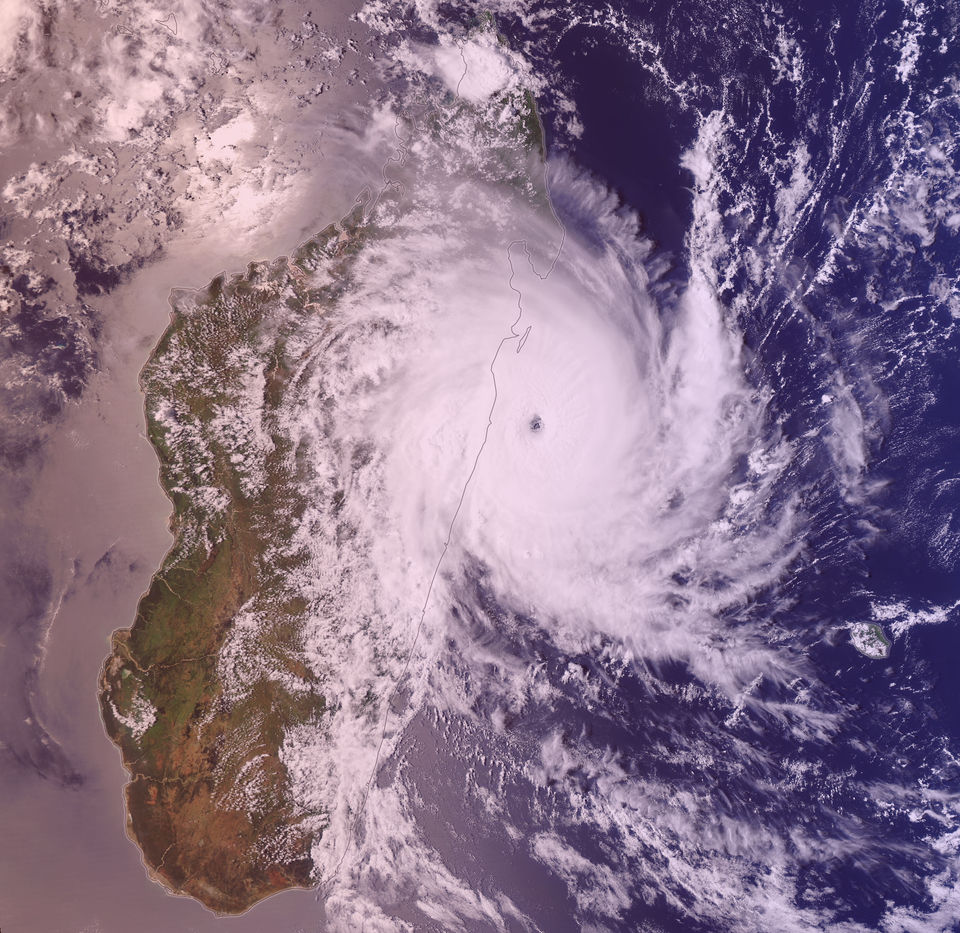
Southern Africa has also been reeling from back-to-back cyclones. Madagascar and Mozambique were hit particularly hard. We can't yet know how these devastating storms will reverberate in the region and beyond, but loss of life, infrastructure, jobs, and overall stability are the ingredients that force people to leave home. When you lose your family, your home, and your job in one fell swoop, sometimes starting anew is the only answer.
People won't stop moving because governments criminalize their behavior. They'll keep moving as long as they need to survive. I'm thinking of them as Black History Month comes to an end. Black history in this country has often been about movement — whether that's the restriction of movement, forced movement, or the cultural shifts that come with freedom of movement.
Migration doesn't need to be violent. It shouldn't be a crisis.
As poet Warsan Shire writes: "No one leaves home unless home is the mouth of a shark." 🌀
The newsletter ends here for free subscribers. Why not upgrade?