

Yes, Trump Is Building a Wall Through (More) Public Lands
This edition is available to all (except the paid exclusives). Support my work and upgrade to paid here for as little as $5 a month.
LISTENING: to my cat meow outside my door
FEELING: ready for lunch
SEEING: spring return life to my part of queens
I have a very unique relationship with the U.S.-Mexico border. I grew up in New York, hundreds of miles away. My parents, however, arrived in New York by first crossing the border on foot. Times were different back then. This was the '80s. For me, the border marks the path home. It's a key part of my origin story.
I've spent time in several regions: Friendship Park between Tijuana and San Diego and the Sonoran Desert in Arizona. I have yet to meet the great expanse of Texas. In the Lone Star State, two natural bodies largely define the border: Big Bend National Park and the Rio Grande. President Donald Trump has prioritized expanding the border wall throughout public lands in the Southwest. We've already seen his administration decimate Arizona's Organ Pipe Cactus National Monument in 2019. These lands matter not only for our recreation and fun — but also for the Indigenous peoples whose cultures are tied to the land and for our more-than-human neighbors who don't recognize the arbitrary borders created by man.
In Texas, swaths of the border region are private land, though. The Trump administration has wasted no time harassing landowners and ranchers, doing its best to take their lands, too, some of which have been passed down for generations. The border wall crisis makes clear how immigration and the environment are inextricably tied.
To make sense of this mess, I spoke to Laiken Jordahl, national public lands advocate at the Center for Biological Diversity. He made one thing clear: The fight isn't over, and these lands are worth fighting for.
This interview has been lightly edited and condensed for clarity and length.
YESSENIA FUNES
OK, so break it down: What is going on with the border wall this time?
LAIKEN JORDAHL
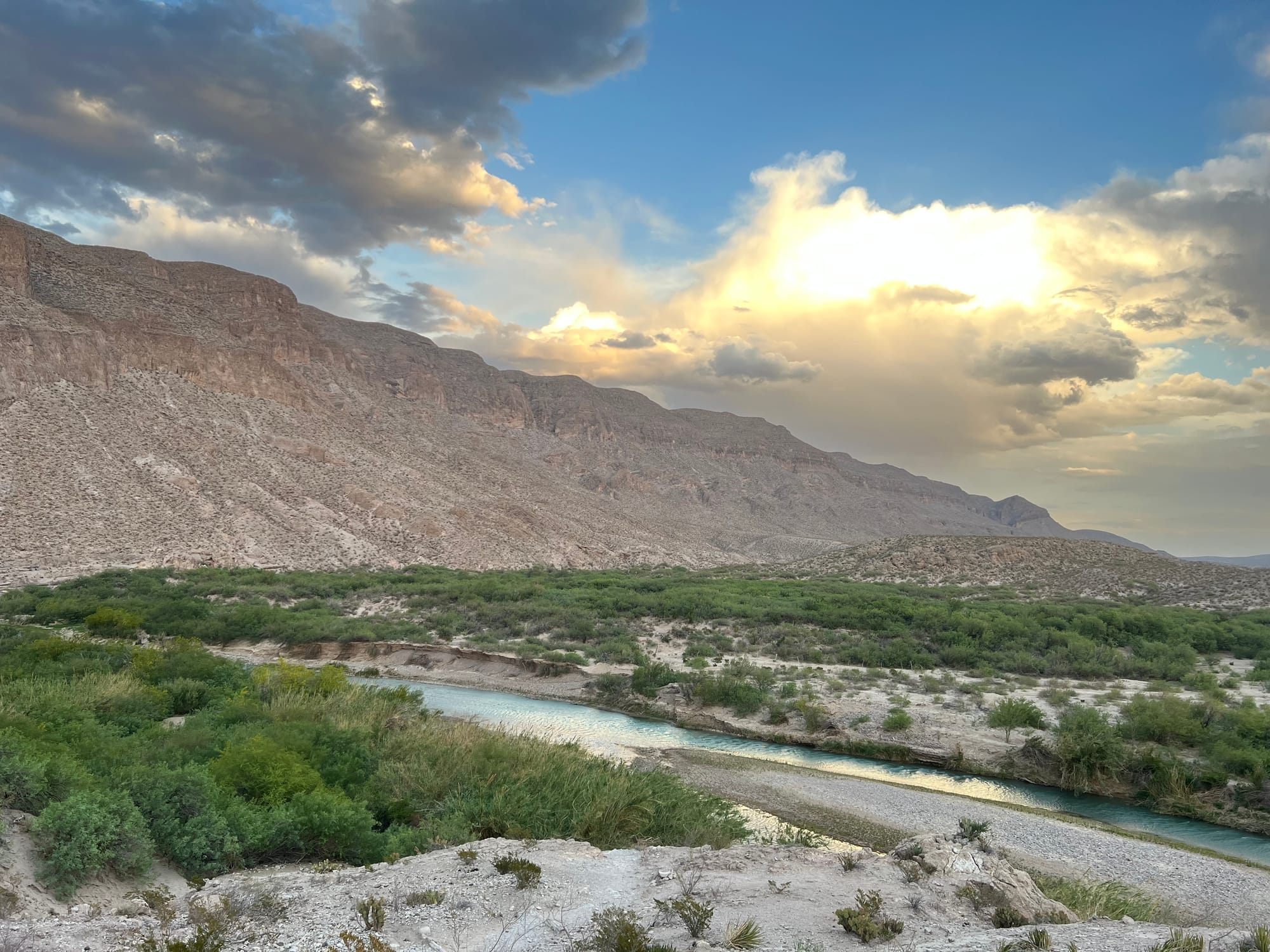
Right now, border walls are rapidly expanding into the Big Bend region of Texas, which is the most remote and least-crossed section of the entire U.S.-Mexico border. There have been a number of contracts already issued. Environmental and cultural resource protection laws have been waived. Surveyors are on site. We're seeing survey stakes in the ground. The wall is rapidly closing in.
We are very much in the dark still about Customs and Border Protection's plans to build walls in the state and national parks. As of a month ago, their map online showed them walling off virtually every accessible stretch of the Rio Grande and showed walls going through both the entirety of the state and national parks, with the exception of some extraordinarily steep canyons where you could not build a wall at all. They have since changed the map, but they still haven't rescinded the construction contracts or the waiver of laws in the state park. In the national park, they have not yet issued a construction contract.
YESSENIA
Yeah, I'm seeing a few headlines saying that the wall won't be going through Big Bend, after all, but that's not quite right, is it?
LAIKEN
People here on the ground know that they cannot trust an unofficial online map. People here are seeing contractors swarming all over the community. As is true of much of Texas, there's not a lot of goodwill between them and the feds. And people believe that if they stop paying attention, they're going to lose access to their lifeblood, the Rio Grande.
YESSENIA
And my understanding is that Texas, compared to other border states like California and Arizona, has been more complicated for Trump's wall expansion because there's a lot of private ranch land along the border.
LAIKEN
That's totally correct. Sadly, the vast majority of Arizona, California, and now New Mexico have already been walled off. So the administration has now set its sights on Texas, including this crown jewel national park in the least-crossed part of the entire U.S.-Mexico border. Landowners here, some friends of ours, have received eminent domain letters. Some other friends who have land rights along the river haven't gotten any letters, but they've seen survey markers directly adjacent to their land. So CBP is pushing forward with this.
There's been no public transparency. There have been no meetings. They haven't told anyone about their plans. So the communities here are bracing for it, and they're organizing like their lives depend on it because, truly, their lives and livelihoods do depend on access to this river.
"It's the one place left that allows you to dream of what the border could be. If they wall this place off, it'll extinguish our ability to dream of a better future for the borderlands."
YESSENIA
Let's talk about those impacts. What would the consequences be of this border wall?
LAIKEN
Rural communities like Brewster County don't have any oil money. There's no natural gas here. The biggest industry here is tourism. And the biggest aspect of that tourism industry is river outfitting. The current wall plans, where a contract has been issued, would cut off extremely popular put-ins for river trips. So the wall would absolutely eat into these outfitters' ability to keep working.
On private lands, many farmers would be cut off from their irrigation equipment. These farmers have water rights to use a certain amount of water from the Rio Grande. That's how they sustain themselves. And this wall would go up between them and the river, cutting them off. The CBP hasn't had anything to say about this or any workarounds. People are going to lose access to the water that literally sustains them.
And then of course, for wildlife, the Rio Grande is the only dependable, reliable source of water around here, especially in the hottest summer months. And if the wall is up, it'll cut off all the wildlife on the north side from accessing the river. In other places, we're seeing bodies of animals just piling up against the wall — animals that die of thirst, who get so close to the river they can smell it, but they won't be able to get through the wall to drink.
And that's going to be devastating for wildlife here.
YESSENIA
For readers who want to take action to help stop the border wall expansion through Big Bend, what should they do?
"This is such a non-partisan — post-partisan — movement."
LAIKEN
There's a big day of action: April 4th, this Saturday. We're appealing to Gov. Abbott in Texas, but also to all of our members of Congress to advocate for us to pass legislation that restricts the use of federal funds to build walls in the Big Bend region. We are urging folks to reach out to Congress, but people should also follow the amazing local coalition here that's popped up called No Big Bend Wall. They're on Instagram and other socials. They always have great calls to action.
And then, if people are able, they should come visit this place, come experience just how wild and rugged and remote it is. Anybody who sets foot here, anybody who's lucky enough to swim in the Rio Grande, they will go on and fight like hell to protect this place because once you've experienced this place, it's unlike anywhere else on the border. It's the one place left on the entire U.S.-Mexico border that is not completely militarized, saturated by surveillance technology, and walled off.
It's the one place left that allows you to dream of what the border could be. If they wall this place off, it'll extinguish our ability to dream of a better future for the borderlands.
YESSENIA
Beautifully said. Anything else we've missed?
LAIKEN
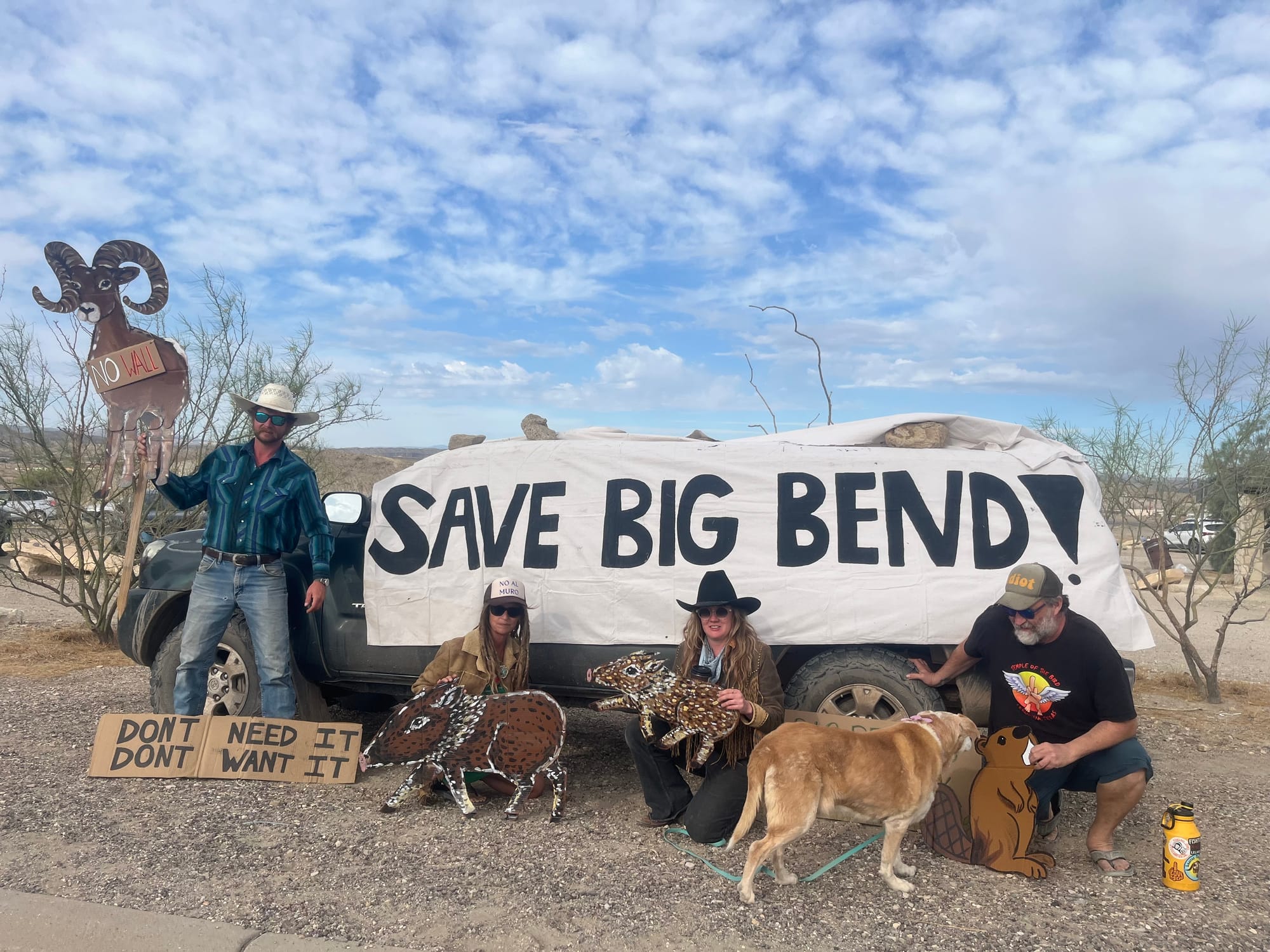
I'll just say that I have never seen a coalition pop up that is so diverse and disparate. This is such a non-partisan — post-partisan — movement. People who are so fed up with politics, who just never thought they would have to be fighting for this. It's been so inspiring to see this bring the community together, and it's brought neighbors together who have not been talking, in many cases, for decades.
It's brought MAGA Republicans together with granola hippies because everyone, everyone, everyone, including the most conservative voices in this country, thinks this is just a terrible idea. And that's what makes the coalition so powerful. 🌀
The newsletter ends here for free subscribers. Why not upgrade?