

2023 Showed Us We Can Win

LISTENING: to my tunes
FEELING: ready for the holidays
SEEING: no holiday snow, just sun
I have this tradition. Every year, I write a list of all the climate and environmental justice successes throughout the year. There are plenty of lists out there that look at climate wins writ large, but I like to focus mine on the wins felt among the communities most vulnerable to environmental disaster.
Where are neighborhoods rising up despite the oppression they face? Where is change happening to boost Indigenous sovereignty? Where are the Global South leaders charging the path forward? Where are the intersections of environment and climate with everything else?
This tradition started in 2017 when I was a staff writer for Earther, the environmental vertical of Gizmodo. That year, I needed that list. Donald Trump had just ended his first year in the White House. The future was feeling quite bleak — but then I researched and remembered all that had been won. It's funny looking back at that list now. So many themes that I wrote about still ring true today. Indeed, the folks who were leading the charge then still are now. The last time I wrote this list was for Atmos in 2022. Every year, a similar pattern forms.
Now, I'll be writing this annual list for you all, here. Now's as good a time as any to upgrade your subscription to paid if you're a free member. It costs as little as $3 a month! Only paid members get to read this one.
Welcome to Possibilities, a creative climate newsletter on the possibilities that lie where crisis meets community. I’m Yessenia Funes, and I'm delighted to see another year of bright spots despite how awful the world has felt as of late.
Right now, Gaza remains under attack. The Israeli military—with U.S. tax dollars—is killing thousands of innocent Palestinian people. It doesn't feel like an appropriate time to celebrate any wins when so much suffering is happening, but I believe that, in moments like these, we need these reminders even more. We need to remember that another world is possible. That the people have the power to win. That this world cannot be left to fester under the rule of evil people.
This year's list is long. It's also hopeful. Let's get into it.
Latin America pride
The year kicked off with a new president in Brazil: Luiz Inácio Lula da Silva. He's no savior, but deforestation in the Brazilian Amazon has gone down since he took office. Lula has also taken steps to recognize more Indigenous territories, protecting some 800 square miles of land in the process.
In Colombia, deforestation has also decreased this year, which some advocates link to leftist President Gustavo Petro. Meanwhile, Ecuador voters decided to ban oil drilling in the Amazon back in August. You can trust Latin Americans to show up for the planet when it matters most.
Land back or bust
I love taking a look back at the year to see where land has been returned to its proper Indigenous stewards. This year, I found a few.
President Joe Biden started the year with a bold move: signing a bill to return some 1,200 acres of federal land in California to the Kurok Tribe. In Minnesota, the state moved to return a park some 2 square miles large back to the Upper Sioux tribe, whose people had suffered extreme violence on the lands. California decided to transfer over 40 acres to the Fort Independence Indian Community in November. These lands cover a fish hatchery, which is expected to thrive under Indigenous management.
Let me know in the comments if I missed others, especially beyond the U.S.
A river breathes again
Dams suck. Truly, they are awful pieces of infrastructure. It's strange to me that hydroelectric dams are considered clean energy. Like, sure, they don't release greenhouse gases, but they terrorize ecosystems. How is that clean?
In Washington, tribal-led efforts have manifested into the nation's largest dam removal ever. The first dam on the Klamath River was removed in June. The process should be wrapped by the end of 2024. The hope is that salmon will once again traverse up these riverways. The dam has long blocked these sacred, ancient migrations.
SCOTUS got one thing right
I think I speak for us all when I say that it's terrifying any time an important case heads to the U.S. Supreme Court these days. However, the June ruling regarding the Indian Child Welfare Act (ICWA) was a breath of fresh air. SCOTUS moved to uphold the law, which was written to stop the removal of Native children from their families. This severance between generations has chiseled away at Indigenous cultures across the U.S. The ICWA works to maintain those cultural connections.
Why is this on a list of climate and environmental justice victories? Any bolstering of Indigenous sovereignty is inherently good for the planet. If more tribes and nations had the autonomy to manage their lands and waters, things wouldn't be as bad as they are.
Montana youth secure court win
In August, I was stunned when a court ruled in favor of youth who had sued their state for its ongoing approval of fossil fuel projects. Over the years, many young people have tried—and largely failed—to sue their governments in an attempt to force action on the climate crisis.
The Montana case is ongoing, but this victory underscores the power of courts. Though the U.S. Supreme Court isn't a friendly place for climate advocates these days, there is still hope among the lower courts.
Africa's first-ever climate summit
Africa is among the most vulnerable regions to climate impacts. Some may argue it is the most vulnerable. That's why it was so encouraging to see a historic event take place on the continent: the inaugural Africa Climate Summit. We need more spaces like these where folks can be in community — and come up with solutions.
The September gathering allowed African heads of state to prepare a unified front for the upcoming COP28, the international climate talks that wrapped up in Dubai a few weeks ago. It also invited other leaders, such as the U.N. secretary-general and the E.U. president to join and take part in conversations led and set by leaders from Africa.
Waste colonialism has got to go
In November, the European Union agreed on a plan to stop exporting plastic trash to other low-income countries. Imagine your local landfill carrying the waste from countries thousands of miles away. That's the reality many developing nations face, but this agreement solidifies a ban of sorts from E.U. members. The deal isn't perfect, though. Some advocates worry that plastic will, instead, be shipped to other developed nations like Turkey.
Maybe we'll see other countries—cough, the U.S.—develop something similar in the new year.
Finally, LGBTQ+ issues in the spotlight
If y'all follow my work, you know that the intersection of climate change and the LGBTQ+ community is near and dear to me. It's one that deserves much more attention and resources. Perhaps federal officials are reading my work, too, because this year's National Climate Assessment is the first to recognize impacts on the queer community.
JK, the credit goes to Leo Goldsmith, a researcher who contributed to the report and whose research has served as the foundation for scientific recognition of the issue. He's a trusted source, as well. We need more of this across climate science!
More fossil fuel divestment
To build coalition against fossil fuels, we also need to remove funding toward dirty energy. 2023 was a big year for the divestment movement globally. Earlier this month, the largest private pension in the Netherlands took the step to divest. It wasn't alone. There was New York University in September, as well as the Church of England in June. You can follow along to see the progress of divestment worldwide here.
This new year, I need to take steps to divest my own funds from fossil fuels. How do you plan to contribute to our collective green future in the new year?
Rest in Power
While we can't say for certain that climate change led to these specific weather events (we need attribution studies for that), we do know that the Earth's rising temperatures are already creating more disasters like these.
Last week, a storm in Argentina prematurely ended the lives of at least 13 people.
Disastrous floods in Queensland, Australia, from Cyclone Jasper on Sunday are behind the death of at least one person.
Dangerous flooding in the Northeast this week has killed at least five people.
Currently Reading
For The Fuller Project, I spent some time getting to know Marlena Fontes, a New York-based climate activist who is setting her target on the fossil fuel industry. The profile is now out in The Guardian.
When I was in Malawi, I had the great pleasure of meeting Chimwemwe Padatha, a local reporter. One of his pieces from that trip is out now about the healthcare crisis Malawi faces as hospitals struggle to recover after Cyclone Freddy.
The Intelligencer remembers when an Iraqi journalist threw his shoes at President Bush 15 years ago: "The American forces killed people in the street. They scared and intimidated my people when they raided their houses in the middle of the night. So the Americans behaved in a savage way."
Oh, how I strive to write essays like this one from The Cut: "The thing about girlhood is that it’s a before time: before puberty, before life, and, importantly, before feminism."
Collage
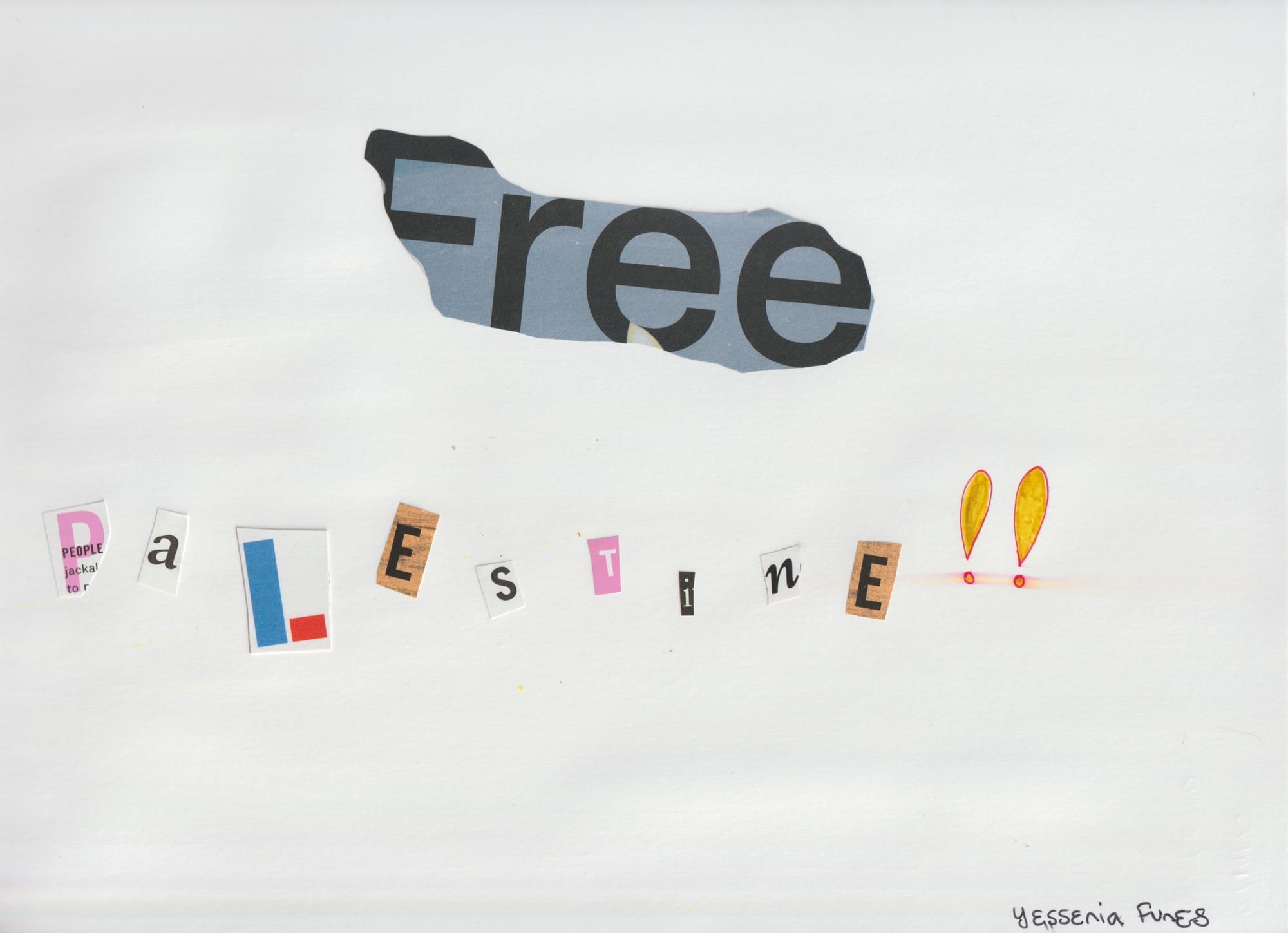
See you next week for the final edition of 2023. xx
- Yessenia

Comments ()